
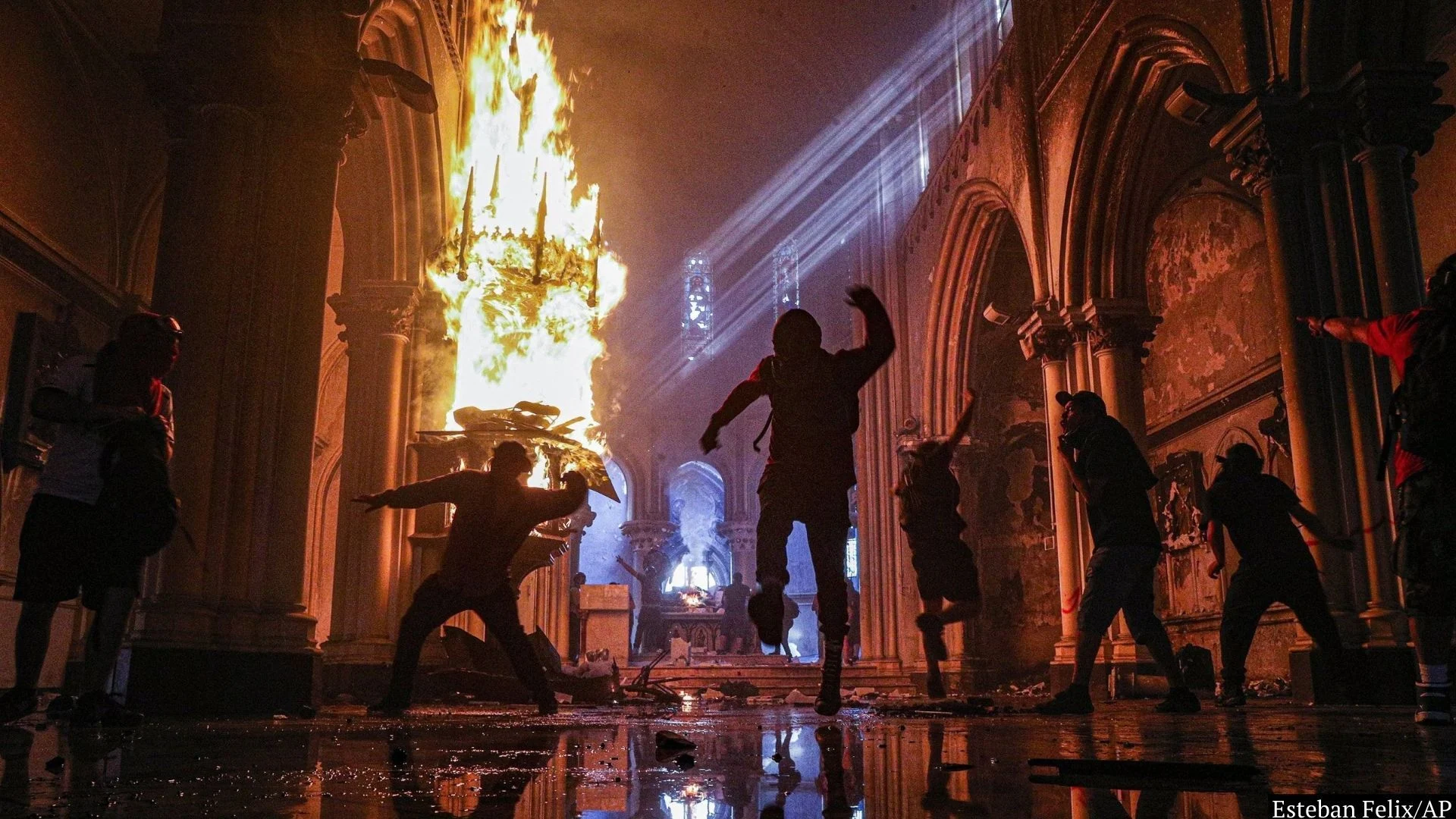
Latin America is a broad region encompassing various
countries, which share certain similarities, such as political instability.
2020 had a series of changes but at the same time a continuation of old
problems. It was a year characterized by social movements, significant
political changes, feminist victories, and losses, added to the strong hit that
COVID-19 has caused. Undoubtedly it was a year full of ups and downs, and
although it would be very long to talk about everything that happened, it is
possible and vital to make a brief account of the events. In this article, you
can see a rewind of the most important things that happened in Latin America in
2020.
Politics and
revolutions
During 2020 Latin America lived
through extreme political events with a chasing feeling of the revolution in
the air that transformed the region. Some of them were processes that started
years ago, and some others were brand new. Latin America is a broad region that
encompasses various countries, which share certain similarities, such as
political instability. 2020 meant for the region a series of changes but at the
same time a continuation of certain problems. It was a year characterized by
social movements, where the Latin Americans showed a general discontent against
their governments and how much they are willing to do for them to change.
Fortunately, these movements were followed up by significant political changes,
feminist victories (and losses). Adding to the strong hit that COVID-19 has
caused, undoubtedly 2020 was a year full of ups and downs, and although it
would be very long to talk about everything that happened, it is possible to
make a brief account of the events.
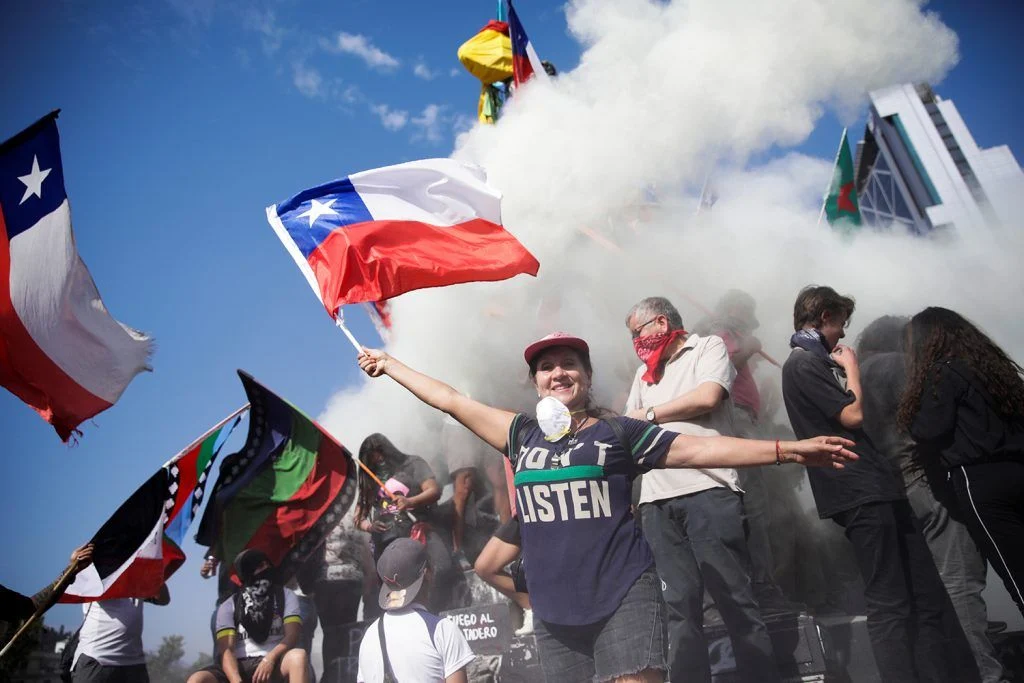
A woman waves the Chilean flag
during one of the protests in Chile. Source: REUTERS.
Since October 2019, a series of
manifestations known as the Social
Outbreak took place
in Chile. Such protests began in Santiago, the capital, but were later spread
to more Chilean cities. The cause of this series of manifestations was the
increase in the price of Santiago public transport, specifically the metro,
which caused a group of students to end up mobilizing the entire country.
A situation even provoked Chilean
President Sebastián Piñera to declare a state
of emergency and a curfew starting on October 19. The protests continued until March
2020, even after the government decided to reverse the increase in the price of
metro tickets. There also was discontent about the citizens’ life situation and
how expensive it was to live in Santiago. In addition to this, there were
complaints about its 1980 Constitution, which had been promulgated during the
dictatorship of Augusto Pinochet.
The manifestation had positive
results. President Piñera declared the implementation of the New
Social Agenda, which would favor the Chilean citizens and would mean economic
support, in addition to holding a referendum to decide if a new constitution
should be written. The vote should have happened in April, but because of the
pandemic, it happened on October 25, with 78%
of the votes in favor of the new constitution. The population achieved its
mission, however, there is still discontent towards the government, a situation
that implies the continuation of protests to continue demanding political and
social improvements.
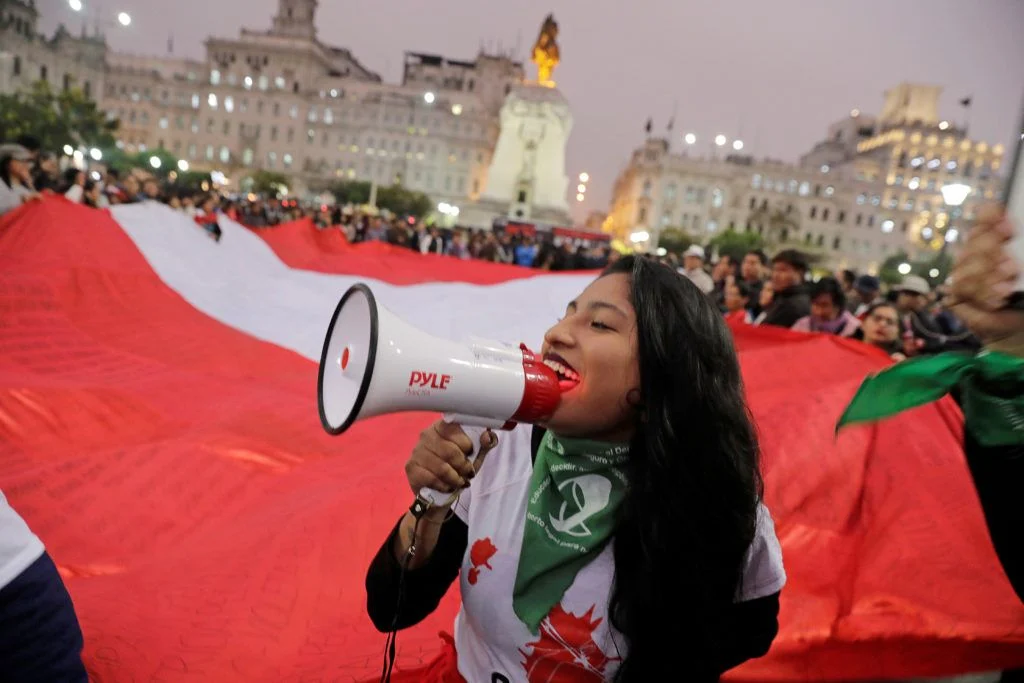
The
protests in Peru in support of Martin Vizcarra. Source: REUTERS.
Another political crisis in the area
was the Peruvian one, caused by President Martín Vizcarra’s dismissal by
Congress for alleged corruption. Manuel Merino took presidential power, but due
to the protests against him, he had to resign from office a few days later, and
Francisco Sagasti took charge. Sagasti is expected to have power until the
presidential elections take place in April 2021. In this way, Peru had three
presidents in one week, a situation that does not look so far-fetched. We also
have to consider that former
Peruvian presidents in recent decades have been involved in corruption and
human rights violations, some of whom were dismissed or prosecuted after
serving their presidential term.
Read: Peruvian Political Crisis:
Three Presidents in One Week by
Dulce María Hernández Márquez (Mexico).
Meanwhile, other countries went
through problems not so different from the usual ones, as was the case of
Venezuela, which in 2020 continues to deal with the illegitimacy of its
government caused in 2019, when
the president of the National Assembly, Juan Guaidó, declared
himself president of Venezuela after Maduro winning the not so transparent, and
probably corrupted, presidential election, the international community agreed
with Guaidó. Maduro’s
presidency is not internationally recognized. This situation continued in 2020.
After the parliament elections, which
neither have international recognition, it is still a matter of debate
about the legitimate president and its legitimate government.
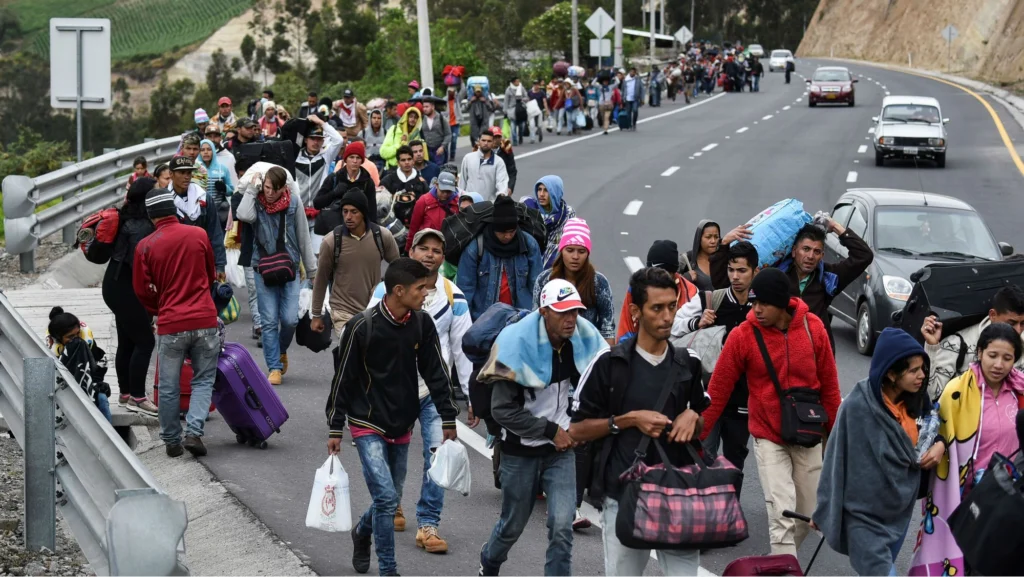
The Venezuelan migrants are on the
border with Colombia. Source: Geopolitical Futures.
In other problems, the Venezuelan
migration crisis was worsened by Covid-19. With the closing of the borders,
many people were forced to leave or enter by irregular means. More than 140
thousand Venezuelans returned from Colombia and Brazil by losing
their livelihoods due to the pandemic. However, there is still a high flow of
people trying to leave Venezuela. Due to the dangerous ways to do it, people
are willing to risk their lives to achieve it. For example, in
December of 2020, a shipwreck of Venezuelans moving to Trinidad and Tobago was
discovered, there at
least 29 dead people were found.
COVID-19 out
of control
Not only
Latin America has a few of the countries with the biggest amount of coronavirus
cases in the world, such as Brazil, Argentina, Colombia, México, and Peru, but
it is also the region with the most
COVID-19 deaths in the world.
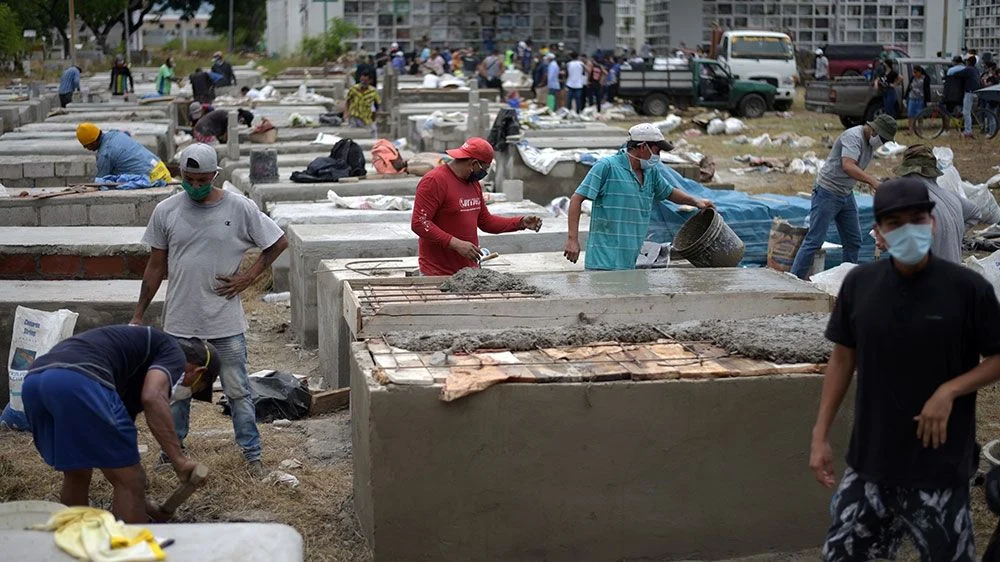
Citizens of Guayaquil are cleaning
up the streets of the city damaged by the COVID-19 crisis. Source: Al Jazeera.
The situation that has led the
countries to the most extreme contingency points, an example of this was
Ecuador, which during March and April of 2020 (while the rest of the region’s
countries were just experiencing the beginning of contagions) saw its healthcare
system collapse. The number of deaths from Covid-19 was so extreme that the
streets of Guayaquil had the presence of corpses that the state could not collect.
Some of these bodies lasted for days on the road. Some others were placed
inside their houses. Time and global help have somehow fixed the situation.
Nevertheless, Ecuador is still in a state of a health crisis.
It is important to mention that
other countries did not have to go through conditions as extreme as Ecuador.
However, they still had terrible times, most likely due to the mismanagement
that their governments had in the pandemic prevention and control measures. It
seems that some Latin American presidents do not take the matter seriously
enough, or it seems that it is not their interest.
For example, the Mexican president,
Andrés Manuel López Obrador, has made bold statements against the use of face
masks as a preventive measure. Among those statements are «wearing
a mask is not indispensable [in the fight against COVID]», against
recommendations of the World Health Organization, and that he «will
wear a mask when there is no more corruption”, making it clear that the use of
masks in Mexico has become a politicized issue. At the beginning of the
pandemic, in one of his daily morning conferences, López Obrador said, “You
have to hug. Nothing happens”. This comment was against the Mexican Secretary of
Health’s statements about keeping social distance or Susana
Distancia (a pun that is a name and also means “Your healthy distance,” used by
the Mexican government as the image of a superhero that fights Covid). His posture has not changed much over the
months.
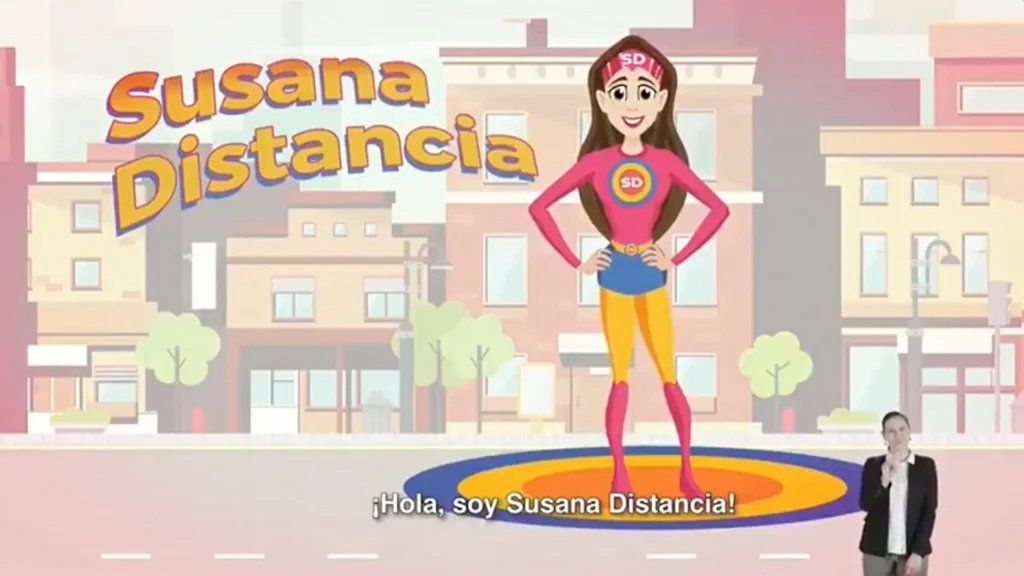
The imagery of Susana Distancia – a superhero
from the squad that fights the COVID. Source: RPP.
A little further south of the
region, in Brazil, President Jair Bolsonaro, who tested positive for Covid-19
in July, has also shown a negative stance on the use of masks, but for
different reasons. Bolsonaro has said that «wearing
a mask is for gays», which follows the line of other homophobic comments
the president has made. He
even vetoed a congressional verdict on the mandatory use of these in
public and private spaces indoors. It is no surprise that Brazil is mired in a
health crisis.
The COVID-19 contingency also had
strongly negative consequences on the region’s economy. According to ECLAC
(Economic Commission for Latin America and the Caribbean), poverty
increased by 37%, representing approximately 28 million people. Besides, some countries
presented a substantial decrease in their GDP, such as Argentina
with 12.9%, being the
G20 country with the greatest decrease, and Venezuela, although it is not
surprising that it presents a drop, it did so with 30%, worsening
even more its already almost non-existent stability.
Other countries such as Mexico and
Brazil saw a decrease of between 5%
and 10%. This
situation is not surprising considering the poor handling that both countries
have had facing the pandemic.
Luckily all
Latin American countries have plans to acquire and apply the vaccines, which has
already started in places like Mexico, Argentina, and Chile. It brings a great
light of hope to a region so hit, not only by COVID-19 but also by all its
internal problems that were already developing and were only worsened by the
pandemic.
Latin
America: Green as feminism
In recent years Latin America has
been characterized by an increase in feminist activity, and 2020 has been one
of the most critical years for the movement. In a place that is considered the second most lethal region for women, where
femicides (violent women deaths with a gender reasoning) considerably increased
during 2020, mainly in Argentina
with 15%, Mexico
9%, and in
some states of Brazil 22%, and the fact that a woman is murdered every 2 hours
in Latin America, feminism,
as well as the implementation of feminist policies are a necessity.
Feminist protests gained strength
during 2020. On March 8, manifestations were held throughout the region for
International Women’s Day and on Monday. On March 9, a female national strike
in Mexico – the «A
day without us» – was implemented. Women did not go to work or school. They did
not buy anything, and they did not even go out or use social media, just to
show the impact that women have in all aspects of government and society,
leading to what would happen if femicides keep going on and causing a
loss of approx 30 000 000 000 Mexican pesos.
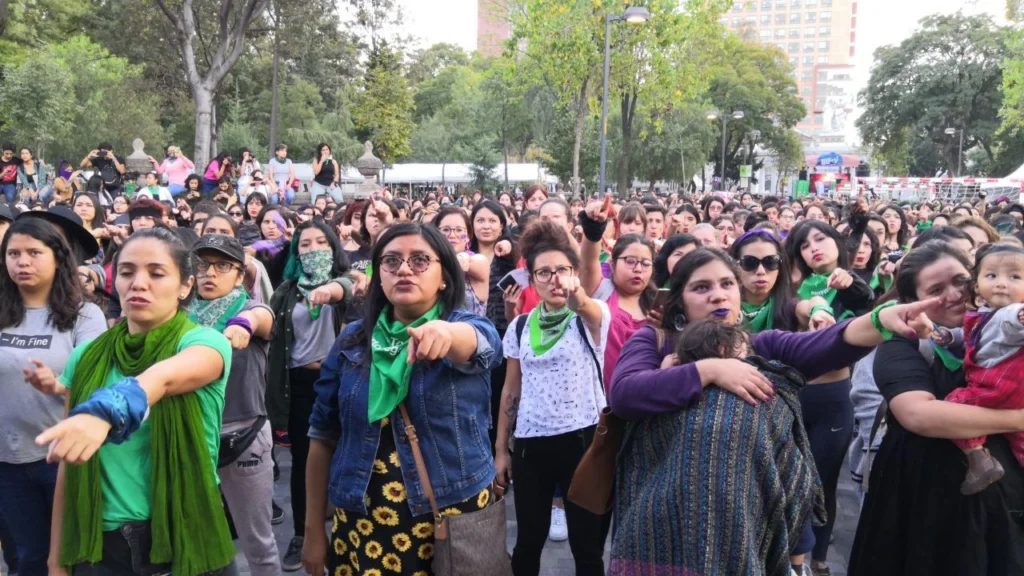
Girls in Chile sing the Un violador
en tu camino during the protest. Source: LA. Network
The feminist protests in the region
have had specific characteristics that have spread, such as songs that have
become feminist anthems, like Un
violador en tu camino (A rapist on your way) that started
in Chile at the end of 2019, including lyrics like “the oppressive state is a
rapist macho” and “you are the
rapist,” being a modification of the Chilean police hymn. This anthem is
performed during manifestations, not only around Latin America but also around
the world, and has also been translated to other languages.
Another of the characteristics
shared in the manifestations is the color green, taken from the February 2018
manifestations in Argentina, when it was debated whether abortion should be legal.
At that time, it was decided that abortion
should not be permitted. However, these protests would create a pattern for
subsequent ones since the protesters wore green
handkerchiefs to support the cause. Now color green is associated with the feminist
struggle.
On January 30, 2020, the Argentine
parliament finally decided that abortion should be legal. We must
hope that Argentina will continue to be the revolutionary guideline in Latin
America. This situation is considered a victory for the feminist agenda in all
the region and is the perfect closure of a complicated year.
Among the feminist victories that
occurred during 2020, it is also found that Mexico began to implement a feminist
foreign policy, following the example of countries such as Sweden and Canada, in
addition to being the first country, not only in Latin America but also in the
developing countries to apply this type of perspective in their foreign policy.
Latin America still has a long way
to go to ensure its women’s safety and that gender equality can exist, so any
victory that occurs along the way is strongly celebrated, with the hope that
one day the situation may change for good.
Conclusion
2020 was a great year for Latin
American politics, the region was characterized by social movements and
revolutionary changes for the betterment of its governments, but it also
witnessed their malfunction.
It is a region in which the
pandemic’s management has been so politicized that it leads to the worst
consequences for the population, seeing collapsed states and intense economic
crises, which are not unique to the region but have had a leading character in
it.
Despite all the ups and downs, Latin
America will continue forward with the hope and optimism that characterizes the
region, working for more revolutionary changes for the good of the population.
Written by Dulce María Hernández Márquez, Associate
Fellow on Latin America Politics (Mexico)