
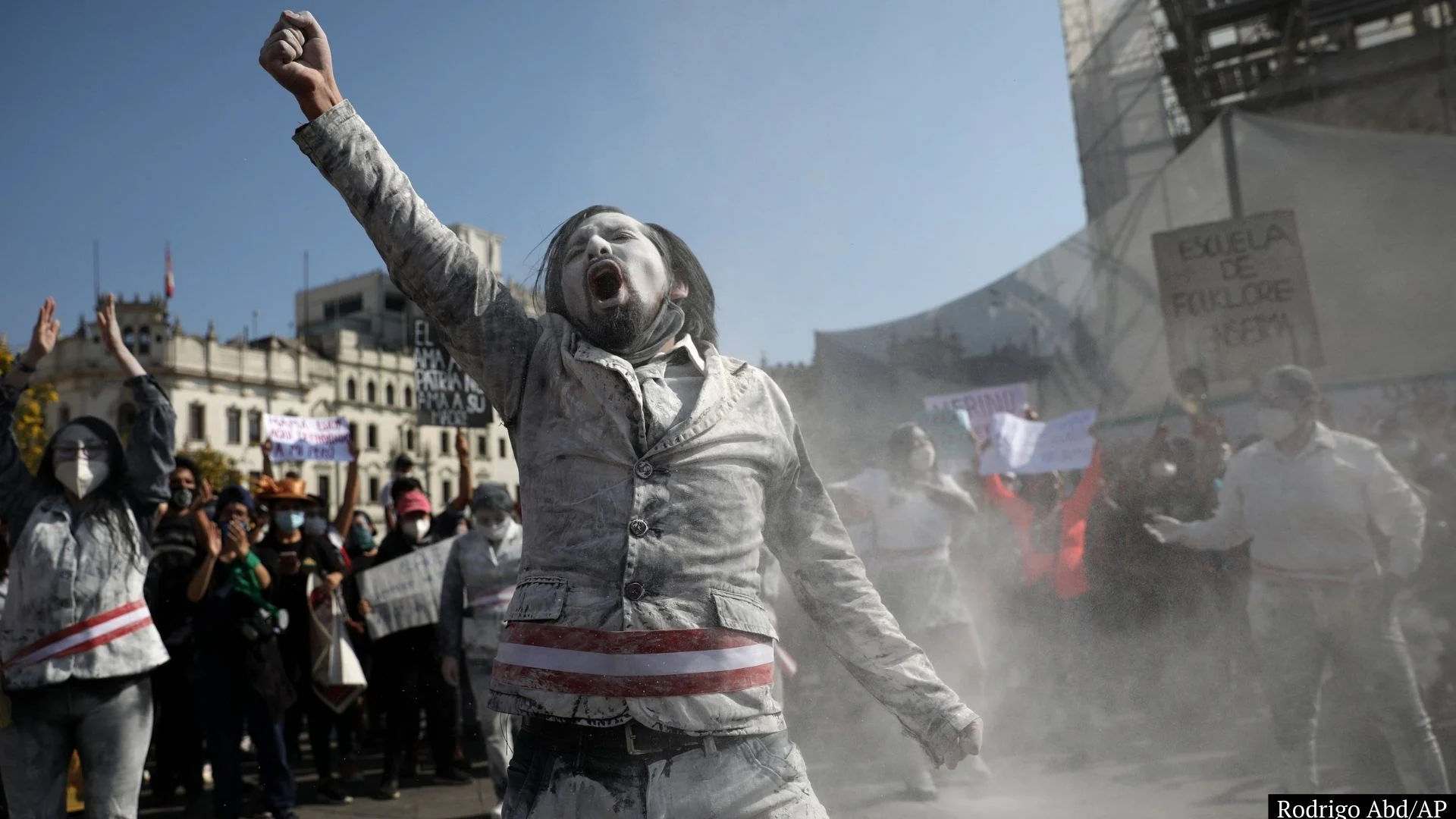
The 2020 year has not been the best one for Peru. Not only
submerged in an economic and a health crisis provoked by the COVID-19 pandemic
but now the Andean Country is living in a political crisis. The cause for it?
The dismissal and resignation of its four more recent presidents, who were in
power in the last four years. Three of them were in power even in the same
week. The forced withdrawal of presidents is a recurrent situation in Peru. The
Peruvian political instability is really clear, but is it leading to a revolution?
Not yet, though it has started a political transformation.
Peru: the definition of political instability
In 2018, President Pablo
Pedro Kuczynski was forced to resign from his position after having found his
links to the corruption scandal of the Brazilian
company Odebrecht, for which he had to be replaced by his vice president,
Martín Vizcarra.
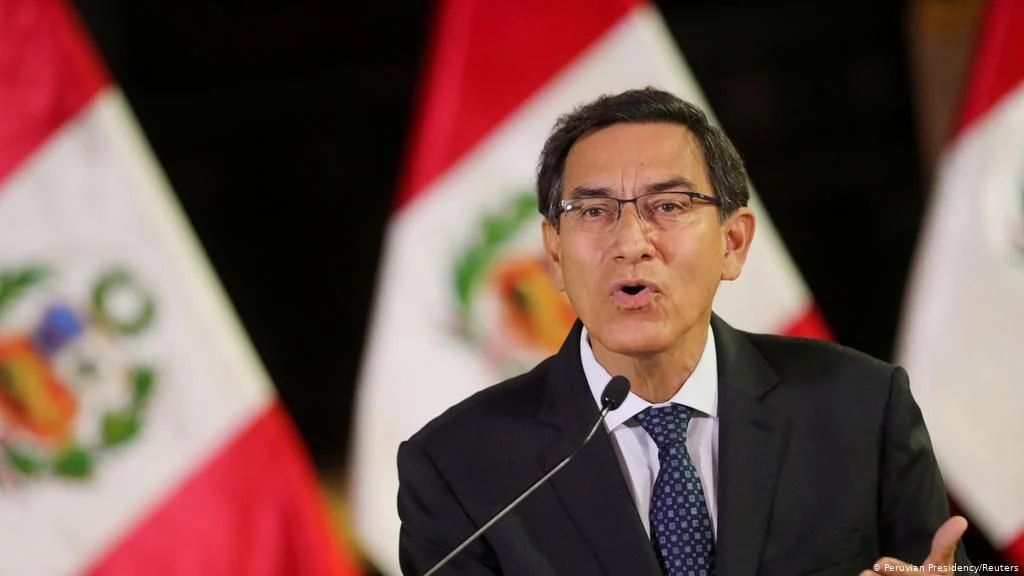
Impeached president of
Peru Martin Vizcarra. Source: REUTERS.
President Vizcarra
expected to complete his term in July 2021, after the elections that would take
place in April of the same year, but he was impeached from his position. The
reasons for his forced withdrawal were similar to those of his predecessor –
some bribes during his term as governor of the province of Moquegua, which,
according to Congress, would give Vizcarra a «permanent moral
incapacity» to serve as president of Peru. The vote had 105 votes in favor of removing
the president and 9 against.
According to the
Peruvian constitution, promulgated in 1823, a “permanent moral incapacity” is
sufficient reason to remove a president and generate a power vacuum that should
generate a legal succession. However, the constitution does not define
what moral incapacity is and is kept to the freedom of decision and
understanding of Congress. Since Peru has a unicameral government, Congress
decisions do not have to be ratified by another chamber, it only takes a
majority of the congressmen to have a final decision.
A real-life Peruvian soap opera?
The political scenario
surrounding Peruvian former presidents is not a good one. There is past to
uncover about the destitution of Martín Vizcarra, twenty years have passed
since the removal of former President Alberto Fujimori and after that, no
Peruvian president has emerged with a clean balance from his government. Below
there is a list of the events.
●
Alberto Fujimori (President from 1990 to
2000) was serving his third term in office when he was accused of corruption
and crimes against human rights. Fujimori fled to Japan and then tried to send
his resignation letter from there, which was denied by Congress. The same
institution that later declared him to have a «permanent moral
incapacity» to govern. Fujimori is currently in the Barbadillo prison
serving a 25-year sentence.
●
Alejandro Toledo (President from 2001 to
2006) completed his presidential term, but in 2016, with the uncovering of the
Odebrecht case, the bribes he received from the Brazilian company while he was
still president were discovered. Toledo was jailed in the United States for
money laundering but was released on bail in March 2020, in Peru
he is considered a fugitive from justice.
●
Alan García (President for two separate periods, the first
from 1985 to 1990 and the second from 2006 to 2011) was also able to complete
his terms of office but was involved in the corruption cases of Odebrecht and
Lava Jato. Garcia committed suicide in 2019 before he could be arrested by the
police.
●
Ollanta Humala (President from 2011 to
2016), after his mandate, was also implicated in corruption in the Odebrecht
case. He is currently serving a preventive prison sentence in the Barbadillo
prison.
●
Pedro Pablo Kuczynski (President from 2016 to
2018) had two years of government surrounded by accusations of corruption and
vote-buying, and finally, with his connection to the Odebrecht case, he was
forced to resign from his position before Congress could remove him. He is
currently under house arrest.
After the resignation of
Kuczynski, his vice president Martín Vizcarra became temporary president,
however, he could only govern for two years when he was declared morally
incapable by Congress.
Since there was not a
vice president to fill the seat, the headman of the Congress, Manuel Merino,
took charge as the president on November 10th, provoking riots all around Peru
and leading to him announcing his renouncement five days later. And finally,
politician Francisco Sagasti was chosen by Congress as acting president, a
situation that eased the protestors but did not fulfill their expectations.
Behind the scenes
The removal of Martín
Vizcarra has more behind it than just the bribery allegations. After becoming
president, Vizcarra did not belong to any party so he diluted his predecessor’s
Congress and then started a new one. Martín believed that by calling legislative
elections he would have more support from the new line-up since with his lack
of a party he had no one to support his decisions. This new Congress, contrary
to what Vizcarra wanted, was fragmented among the multiple parties and did not
give him the support he needed.
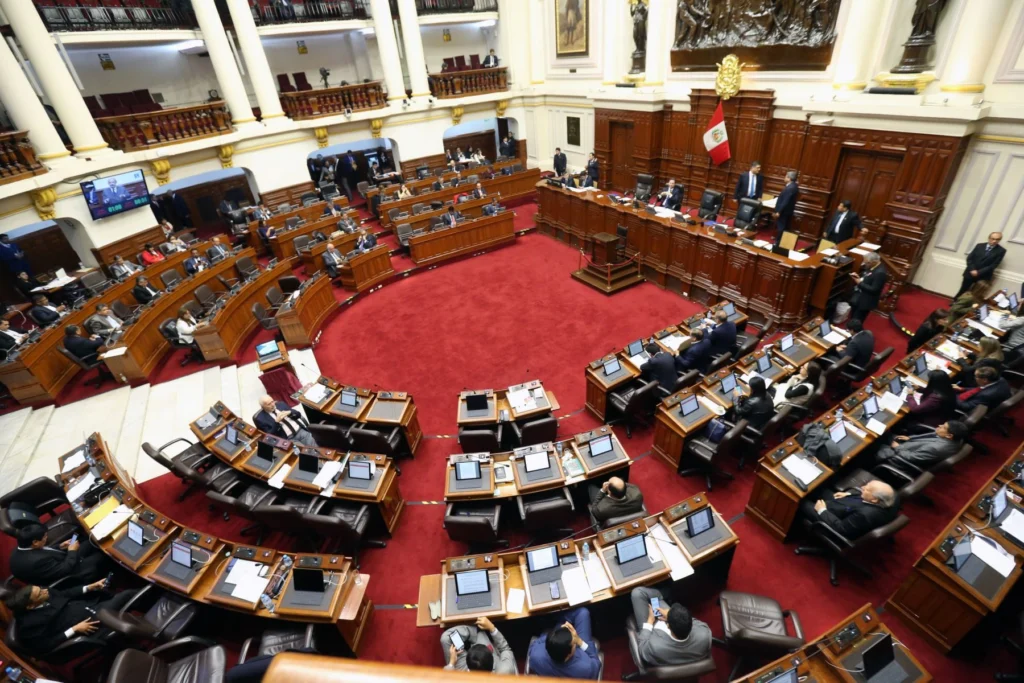
Congress of Peru.
Source: Andina.
Furthermore, he opened
an investigation against corruption in Congress, which involved the majority of
Congress. This investigation was to be accompanied by a reform against
corruption and to create a more democratic path to select the congressmen.
Curiously, the people who were being investigated for committing this crime
were the same people who voted for the «moral incapacity» of the
president.
Read more: 2020 in Latin America: a Political Roller Coaster
Guilty or not, Martín
Vizcarra was beginning a democratic transformation in his country however he
was interrupted by the same corruption that he was trying to stop. Vizcarra’s
dismissal could not come at a worse time. Peru is in a very deplorable economic
position that has been worsened by the pandemic, in addition to its multiple
political scandals, being one of the countries most involved in the Brazilian
company Odebrecht corruption case.
Although at first
glance, it might seem that the Peruvian people (especially the youth who call
themselves the “bicentennial generation”) supported Vizcarra
because they protested after his dismissal, it was not like that. The
protesters carried banners that read «Neither Vizcarra nor Merino» and «Let everyone go» referring to the
fact that the people no longer want corrupt rulers and that they need a great
change in government.
Is Peru leading to a revolution?
Peru is moving towards a
political transformation in favor of democracy. Not every country can sentence
its former presidents to prison or remove the president in charge so quickly,
not only referring to the dismissals by Congress but specifically mentioning
that it only took the protestors five days to get Merino’s resignation. Peru may not have started a revolution such as
those experienced in Latin America in the 20th century, but it has generated a
change in the political participation of its population. It may even have
started the process of getting a new Constitution during this decade if the
protests are influenced by the movement of their Chilean neighbors that recently achieved that goal.
Visit: The
Resource Curse: Path toward Stagnation or Development? by Vladyslav Konstiantynivskyi (Canada)
It will be necessary to
promote government transparency and improve the party system that is so
fragmented so that they can truly represent the society. For the moment, Francisco Sagasti, transitional
president of Peru, will have to maintain a low-profile government if he does
not want to end up like his predecessors, although it seems that he has a
little more support from the Peruvian population (because the protests have
diminished considerably since the declaration of his presidency), still, he is
one step away from having the entire country against himself. His government
carries a great burden on its shoulders since it will be carrying the political
crisis and the economic and health crises that the COVID-19 pandemic has
caused, so that the April 2021 elections could be held at their proper time,
and to not make the situation even worse.
Conclusion
Peru is mired in a
political crisis with great instability that one day could have a happy ending.
Although the crisis has been caused by multiple corruption scandals over the
years, the Peruvian population showed the true colors of democracy and political
participation with the hope that these movements in the future will generate a
change in favor of the democratization of the country.
It only remains for the
government of Francisco Sagasti to try to hold itself together in the coming
months until the April 2021 elections happen and wait for the next change of
president to take place in July of the same year (and not before for the sake
of Peruvian stability).
Written by Dulce María
Hernández Márquez,
Autonomous University of Sinaloa (Mexico), Major in International Studies