
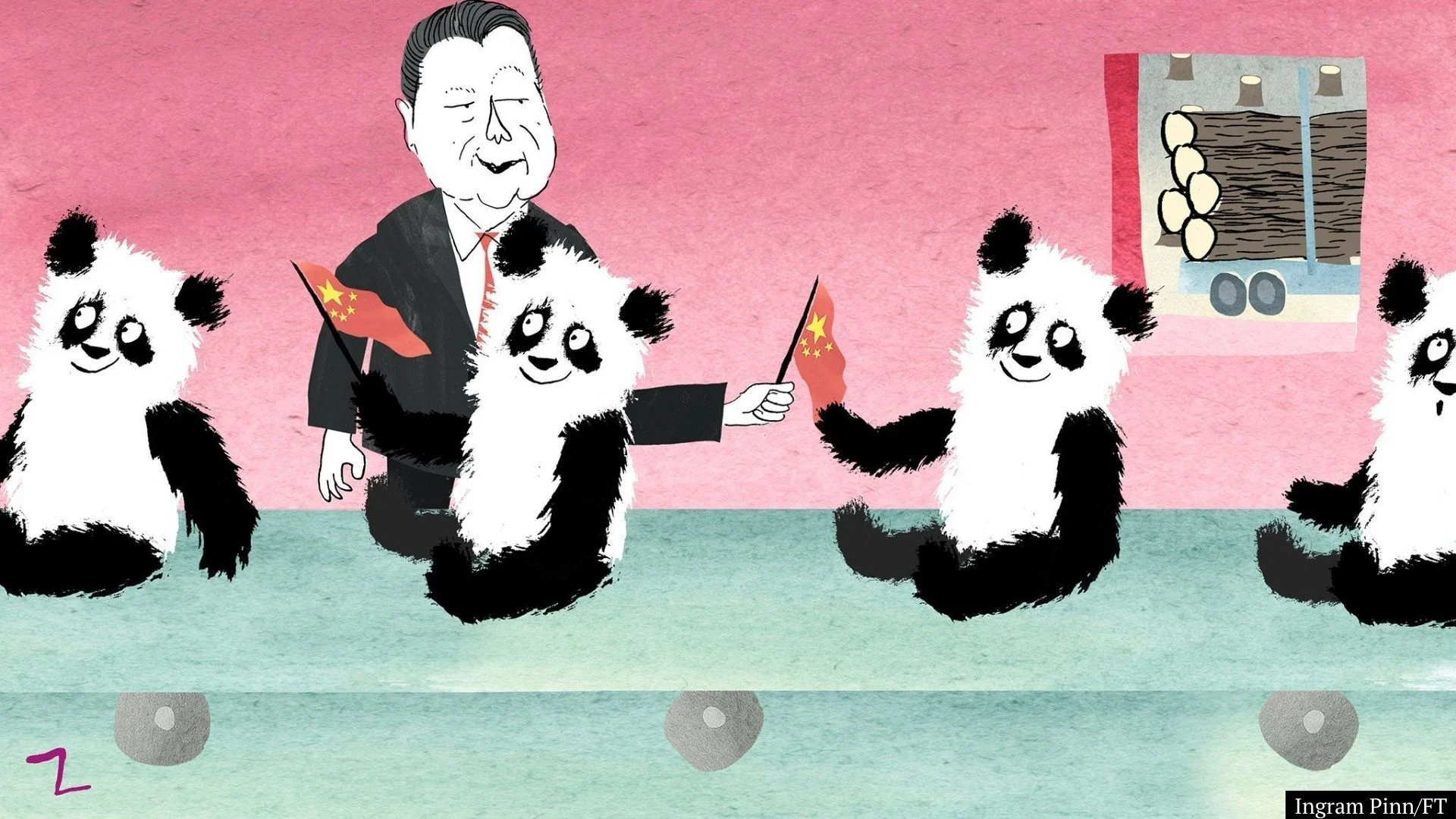
China’s increasing role in shaping the geopolitical and
geoeconomic space of the 21st century has become an important factor. Its
complex national power is growing rapidly, the geography of national interests
is expanding, and international influence is increasing. Now the interests of
the People’s Republic of China lie not only in the internal economic development
but also extend to almost all regions of the world. Moreover, the foreign
policy of this eastern country is reaching a new level. China tends to change
its foreign policy of self-identification in the direction of positioning
itself as a global state. The Chinese leadership is stepping up its role in
shaping the international agenda and creating new mechanisms, like ‘sharp power’, and institutions
for global governance.
Chinese ‘soft power’
The term ‘soft power’ was first used by Joseph Nye in 1990 in his book Bound to Lead. As per his opinion ‘soft power’ is the
ability to obtain preferred outcomes by attraction rather than coercion or
payment” and as we can see the usage of ‘soft power’ was one of the
contributors to China’s success. It brought the country closer to the status of
great power. China spends $10 billion annually on the promotion of its ‘soft power’. One of its main
tasks at the international level is to create an attractive image of the
country. The second task is the desire to force other countries to accept the
cultural values of the state and its ideology. One cannot but acknowledge the
success of this policy and the growing role of China as a global player on the
world stage. It is becoming an increasingly modern, capitalist state, which is
integrated into international institutions. Due to rapid economic growth,
modern China has more and more resources to address its geopolitical and
economic interests, which extend far beyond the Asia-Pacific region. China
declares itself as a leader in many areas, including space.
Read: Peruvian
Political Crisis: Three Presidents in One Week by Dulce María
Hernández Márquez (Mexico).
It should be noted that at the state level, the Chinese interpretation of ‘soft power’ was first
presented on October 15, 2007, in the
political report of the General Secretary of the Central Committee of
the Communist Party of China Hu Jintao at the XVII National Congress of the
Communist Party of China (CPC). In his report, he specified the tasks for
building the ‘soft power’ of the state
within the framework of creating socialism with Chinese characteristics in four
areas:
1) creation of a system of core socialist values,
strengthening of the attracting and cementing forces of socialist ideology;
2) formation of a harmonious culture, education of
civilized customs;
3) to spread the national culture worldwide, build a
common spiritual hearth of the Chinese nation;
4) to promote innovation in culture, strengthen the
vitality of cultural development.
The real aims of Confucius Institutes and Classes
It was the Confucius Institutes and Classes that became one of the main
tools for promoting China’s interests and values. The Confucius Institute is an
educational and scientific institution created within a free foreign economic
partner. In addition to the development of the curriculum, the Confucius
Institute is also involved in the development and promotion of the Chinese soft
power policy. Their role in this area is conditioned by the fact that students
are provided with the opportunity to not only learn the Chinese language but
also become acquainted with the culture, history, and modernity at Confucius
Institutes. The first Confucius Institute began its functioning in South Korea in 2004. They
operate at foreign Centers for the Study of the People’s Republic of China.
There are small ‘Confucius Classes’ if it is not
possible to establish full-fledged institutions.
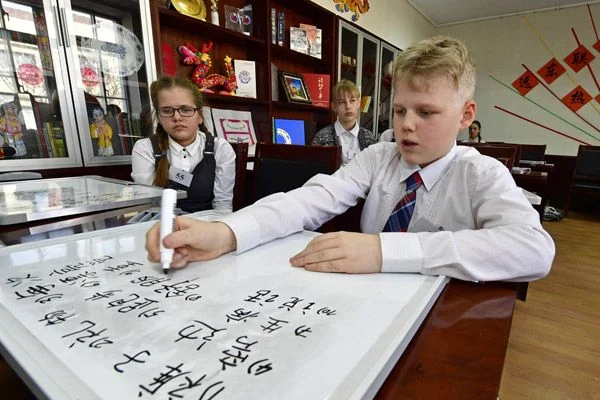
One of the Confucius Classes in Europe. Source: China
Daily.
If we talk about the total number of Confucius
Institutes around the world, then, according to the data which is contained on
the official website of Hanban, their total number is 541. Most of them are located
in Europe – 187, 138 in America, 135 in Asia, 61 in Africa, and the rest are
operating in Oceania – 20.
“Confucius Institutes are aimed not so much at promoting
Chinese culture, but at strengthening the country’s political influence in the
world. They are often accused of interfering in the academic rules of partner
universities, monitoring other Chinese citizens, and even espionage”, as Oksana Kolosovska said. For example, according to the
research made by the National Association of Scholars, as of May 2020,
81 Confucius Institutes were registered in the United States, which fully
operate on the premises of American universities and colleges. Also, 42 of
Confucius Institutes are already closed, and some of them are in the process of
closing because the American universities see a threat to their national
security and academic freedom. For example, the
University of Oregon, San Diego State University, New
Mexico State University, etc are among them.
As for the European continent, Sweden became the first European country to
close the Confucius Institutes and Classes. Among the reasons that prompted
this was:
– Swedes consider them a tool for ‘brainwashing’;
– deterioration of relations between the states;
– security issues;
– violations of human rights and freedoms in China, such
as the arrest of Swedish bookseller Gui Minhai for selling books which
criticize Chinese ruler Xi Jinping;
– takeovers of Swedish companies by Chinese ones.
Besides, China has recently invested and continues to invest billions of
dollars in various projects to improve its positive image abroad. The global economic
project ‘One Belt-One Road’ (revival of the
ancient Silk Road along with sea routes) also has a ‘soft’ dimension. By the way, during the visit of Iranian Foreign
Minister Mohammad Javad Zarif to Beijing in August 2019, it was agreed that
China would invest $ 280 billion in the development of Iran’s oil, gas and
petrochemical sectors.
In particular, these numerous investments have been made in the development
of foreign-language media (foreign broadcasting), search for international
partners and their involvement, the launch of academic mobility programs for
students, and more active cultural activities. Although, these efforts have
paid dividends only in certain parts of the world, namely among countries
needing major infrastructure investment. Thus, China’s ‘soft power’ remains awkward, and the question arises as to whether
this kind of force is inherent in China’s foreign policy, or is it only a cover
for something else.
‘Sharp’ influence
In January 2018, Joseph S. Nye Jr. published an article How Sharp Power
Threatens Soft Power, in which he described a new type of force used by
China – ‘sharp power’. He called this
power ‘sharp’ because it tries
to ‘pierce, penetrate,
or perforate’ the information
and political environment of countries which are within its interests. As he stated in his article, ‘sharp power, the deceptive use of information for hostile
purposes, is a type of hard power’. The scholar supported the view that China’s ‘soft power’ could pose a threat to the developed Western democracies
and that the term ‘sharp power’ should, therefore, be used more actively instead. The main difference
between the forces is in the values and methods. China is an authoritarian
state that uses intimidation, sabotage, and pressure to justify its regime
abroad.
The Government of the People’s Republic of China uses various tools to
ensure the effectiveness and productivity of the ‘sharp power’, such as:
– promotion of culture, language, and religion, for
example, with the help of Confucius Institutes and Classes. In 2019, Human Rights Watch stated that ‘Confucius Institutes are extensions of the Chinese
government that censor certain topics and perspectives in course materials on
political grounds, and use hiring practices that take political loyalty into
consideration’;
– the attractiveness of investments for other countries.
A striking example is an African continent, where, according to a survey
conducted by the NGO
Afrobarometer in 2014/2015: ‘Almost two-thirds
(63%) of Africans say China’s influence is “somewhat” or “very” positive, while only 15% see it as somewhat/ very
negative. Favorable views are most common in Mali (92%), Niger (84%), and
Liberia (81%)’.
– media manipulation. The PRC government uses the media
to create a positive image not only within the country but also abroad, using
censorship. China spends billions of dollars each year to increase its media
presence. ‘China Daily has paid American
newspapers 19 million dollars for advertising and printing in the last 4 years
alone’. Also, a clear
example of an attempt at manipulation is the statement of Chinese
President Xi Jinping at the APEC summit in 2016 about “China’s commitment to training 500 Latin American
journalists in the next five years”.
The United States Congressman Beyer underlined that the growing
vulnerability of democracies to sharp power tactics made possible by
technological advancements and the rise of social media. He noted the
unprecedented prevalence of subversion, intimidation, and internal meddling by
autocratic governments. “Technology gives these governments the ability to cost-effectively
reach into cell phones, reach into living rooms around the world and sow fear,
doubt, division, undermine alliances, [and] spread fake news”, – Beyer pointed out.
Indeed, the modern development of technology has many not only positive but
also negative aspects. On the one hand, the same globalization unites at one
time disparate nations, countries, but on the other – there is the question of
protecting the interests of national minorities and national cultural heritage
and language in the new conditions to oppose the cultural expansion of other
countries. Therefore, along with the positive factors of the impact of new
information technologies on all spheres of public life, it is also necessary to
take into account the negative consequences of their impact on society as a
whole (social aspects of media and telecommunications) and individual
consciousness (individual ecological consciousness).
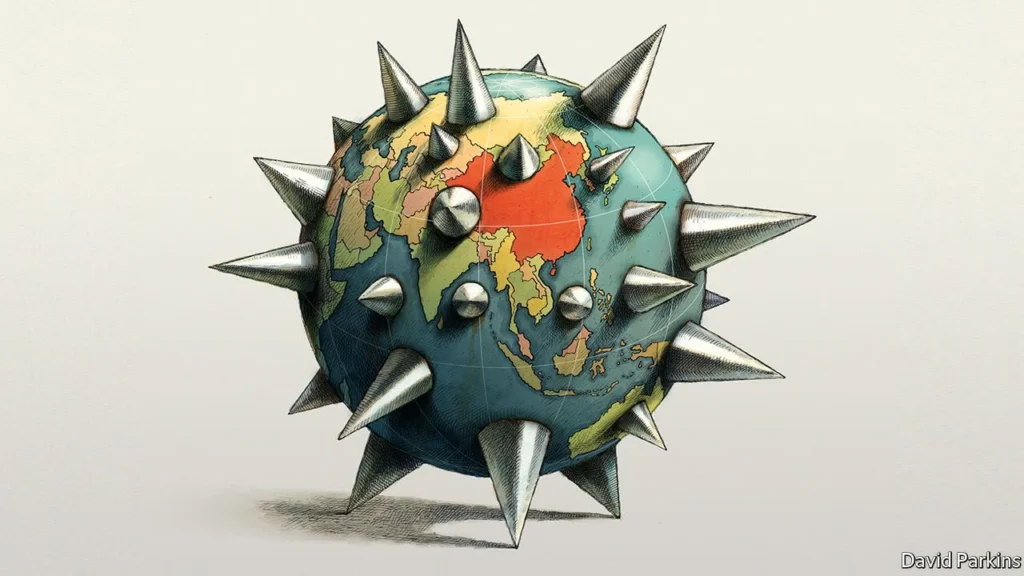
The cover image
of ‘The Economist’ issue about the Chinese ‘sharp power’. Source: The
Economist.
Conclusions
Thus, we can say that China’s ‘sharp power’ can question the existence of the modern world system
and lead to its drastic change, which is unfavorable not only for the United
States but also for other countries, because economic power is not the basis
for the existence of a successful democracy. This instability, in the first
place, threatens the geopolitical interests of the United States and may lead
to the beginning of the ‘domino effect’ and the complete decline of the system under which
states exist nowadays. ‘Sharp power’ is quite effective because institutes in democratic
institutions are open to the outside world and thus vulnerable to foreign ones.
Also, the current crisis in US-China relations reaffirms the utopian nature
of the “G2” idea, put forward
by some American political scientists to solve global problems.
Political experts must tackle the problem, which consists of repulsion of
the external influence, and at the same time, preserve fundamental democratic
values. Simply saying “no” to Beijing will not yield satisfactory results in
today’s interdependent world. Therefore, we suggest paying attention to the
following recommendations:
1. Analytical centers and universities need to design
research and education programs more carefully to ensure that they have enough
highly qualified staff to address the issues posed by new challenges and
relations between states.
2. Weaken the CPC’s board of relations with think tanks
focusing on Asia.
3. Strengthen measures of identifying, monitoring, and
protecting society from misinformation/propaganda.
4. Identify and punish individuals/entities who knowingly
disseminate authoritarian misinformation.
5. Strengthen cooperation between law enforcement authorities and
intelligence agencies.
6. Start cooperation with foreign partners who have
experience in solving such kind of issues.
7. Work with Chinese communities, both as a guaranteed
goal and to benefit from their knowledge.
8. Through diplomatic channels, foreign governments
should oppose intimidation and harassment. The Chinese are vulnerable to
negative feedback, and in any case, such reports will damage China’s image,
contributing to the ‘loss of a friendly face’.
Written by Serhii Nasadiuk, Vasyl’ Stus Donetsk
National University (Ukraine), Degree in International Relations