
Summary
The militarization of Kaliningrad region has been
intensified lately, posing great threats to NATO`s Baltic allies. Russia has
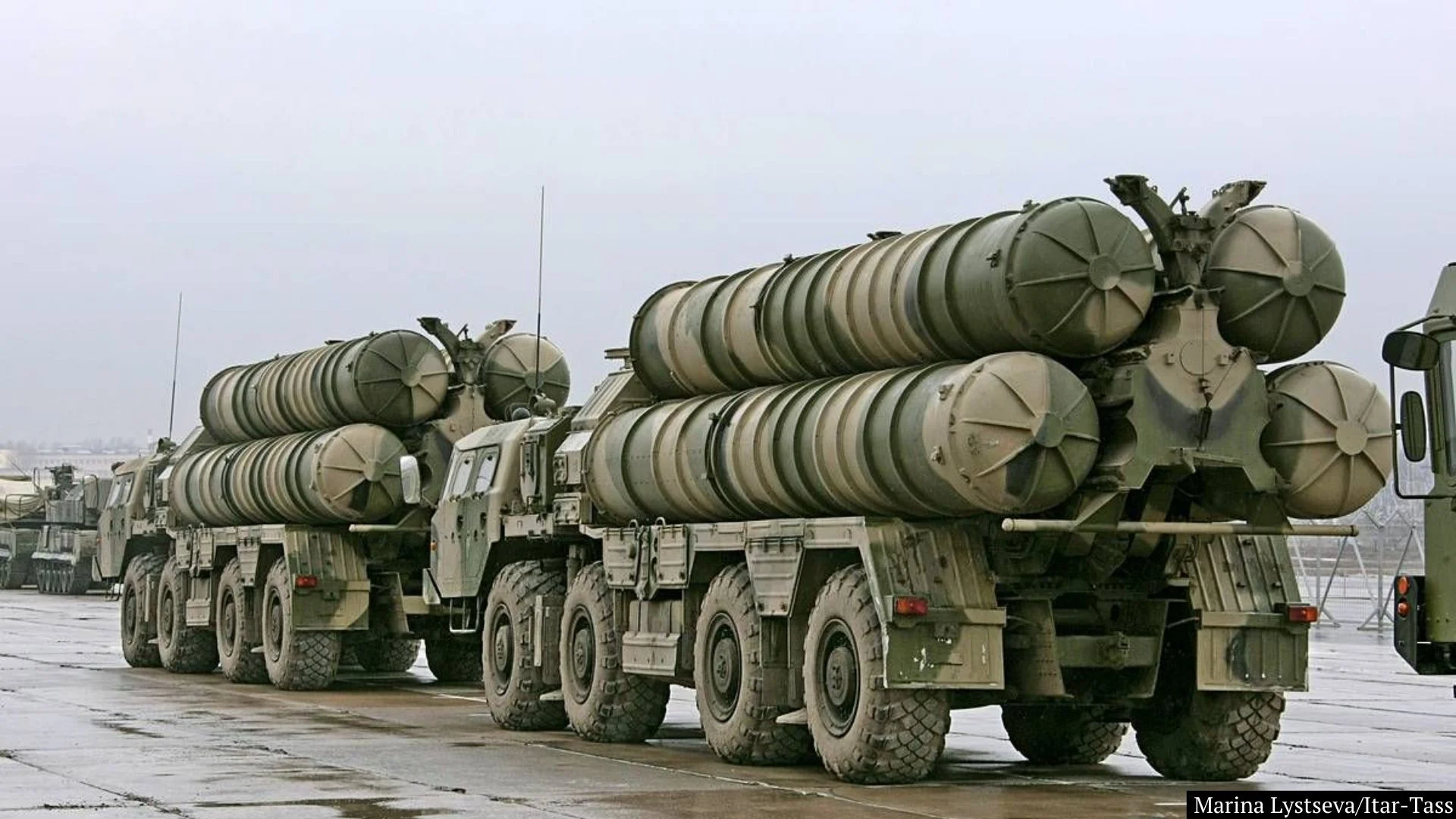
opted for an asymmetric A2/AD strategy and deployed S-300, S-400 and Bastion
defense systems covering the territories of Poland and Lithuania as well as the
whole Suwalki corridor which is considered as NATO`s choke point. As a result,
NATO`s freedom of movement even within its own territory could be limited and
the access to the operational areas denied.
Introduction
A Russian exclave bordering such NATO allies as
Lithuania and Poland has always been a central point at issue both in a
transatlantic dialogue and in Russia-NATO relations. Kaliningrad region became
part of the USSR under the Potsdam Agreement. Its permanent status was to be
determined at a further peace settlement which never happened. Thus,
Kaliningrad remained “Soviet” and subsequently “Russian”. It bears not only
symbolic meaning for contemporary Russia, but also a great strategic one, as it
became a heavily militarized region, so called Russian “bastion” in Europe
posing considerable military threats primarily to NATO`s Baltic allies due to
its A2/AD capabilities. This article aims to analyze Russia`s A2/AD
capabilities deployed in Kaliningrad and to outline their effects on NATO
security.
What are A2/AD capabilities?
According to US ‘Joint Operational Access Concept’, A2/AD
stands for Anti-Access and Area Denial, where ‘anti-access refers to those actions and capabilities,
usually long-range, designed to prevent an opposing force from entering an
operational area’, while ‘area denial refers to those actions and capabilities
designed to limit adversary`s freedom of action within the operational area’. [1]
You may be interested in: The Evolution of NATO’s Strategy in the Arctic Region
To put it simple, A2/AD strategy is intended to
prevent an adversary from entering the theater (Anti-Access) through the use of
long-range weaponry and deprive him of freedom of action and movement therein
(Area Denial) by means of shorter-range missiles.
A2/AD strategy usually involves a variety of missile
defense measures such as surface-to-air missiles (SAM), anti-ship ballistic
missiles (ASBM), cruise missiles (anti-ship cruise missile, ASCM), etc.
Russia`s A2/AD measures in Kaliningrad
As it has already been mentioned, Kaliningrad region
is heavily militarized. The 336th Guards Marine Brigade (Baltic
Fleet Command) as well as the 79th Guards Motorized Rifle Brigade
(Western Military District) and the 7th Guards Motor Rifle Regiment
are located in the region. The air component is also strong. For instance, the
152nd Guards Missile Brigade (Chernyakovsk Air Base) equipped with
Tochka-U missile systems (ranging up to 120 km) is of high offensive potential.
As for the defensive capabilities of Russia in
Kaliningrad, S-300, S-400 missile defense systems as well as Bastion system are
to be taken into consideration.
Other materials on the topic: The future of NATO in the context of European security
S-300 missiles have a range of 150-200 km and, located
in Kaliningrad, cover border areas of Lithuania and Poland. As for S-400
systems, they range from 250 up to 400 km, and thus can reach the capitals of
the two countries as well as cover the whole Suwalki corridor. In 2016 Russia
deployed the Bastion defense system (K-300P Bastion-P) with a range from 120 to
300 km aiming to combat aircraft carriers approaching the coast [2].
Given the aforementioned, it is clear that S-300,
S-400 and Bastion missile defense systems play a significant part in Russia`s
A2/AD strategy, as their operation covers territories of 2 NATO allies and
significantly hampers any NATO reinforcements there.
NATO`s choke point
As Ben Hodges, US Army Lieutenant General, once said: ‘If Kremlin wants to undermine the Alliance,
the best way to do that is to demonstrate us that we cannot protect our allies
– to launch a hybrid attack and cut the Suwalki corridor off’ [3]. The
Suwalki corridor is a 100-km borderline between Poland and Lithuania which
connects the Baltic states with their NATO allies. In other words, there is no
other way for NATO states to conduct reinforcements and protect their Baltic
allies in case of Russian offensive. What is more, S-400 missile system fully
covers the Corridor, thus denying any ‘missile access’ by NATO in case of the
conflict. Given the fact that the militarization of Kaliningrad and Russia`s
Western Military District has been intensified, while Kremlin is also able to
launch attacks from Belarusian territory, the Suwalki Corridor appears to be
particularly vulnerable [4]. Hence, denying the corridor to NATO would be a top
priority in case of Russia`s offensive against the Baltic states.
Implications
Although it is obvious that NATO outmatches Russia in
global conventional military force, Russia`s A2/AD strategy significantly shifts
security balance in the Baltics and entails serious implications for the
security of NATO states there.
Firstly, missile defense systems located in
Kaliningrad constrain Alliance`s freedom of movement even within its own
territory as well as deny NATO force deployment to the area of operations.
Thus, in the event of a conflict, NATO might find itself unable to conduct
full-scale reinforcements in the Baltic region to protect its allies there.
Read also: NATO Space policy: Integrated response to incoming threats
Secondly, Russia`s A2/AD measures in Kaliningrad might
disrupt NATO Navy surface and submarine operations and even threaten them out
to an extent where they may not operate effectively [5]. This essentially means
that NATO forces will have to be deployed not where it is most efficient to
operate, but where it is at least safe.
And, finally, enjoying full freedom of movement as
well as missile defense in Kaliningrad, Russia might conduct an offense against
Baltic states from Belarusian territory by easily taking over the Suwalki
corridor and, thus, cutting Lithuania, Latvia and Estonia from any
reinforcements and supplies from Poland or Germany.
What can be done?
Nothing in this article should suggest that Russian
aggression against NATO Baltic allies is likely to happen, however, as a matter
of prudence, appropriate measures are to be taken to mitigate NATO`s
vulnerability in the region.
First, NATO should develop a comprehensive strategy
and invest in weapons systems capable of breaking A2/AD systems, namely
standoff weaponry which may be launched at a distance sufficient to evade
defensive fire from the target area. The employment of unmanned ships which can
misguide anti-missile systems may also be an efficient solution. Second, coordinated
ISR (Intelligence, Surveillance and Reconnaissance) activities are crucial,
since the appropriate measures in this regard would allow to identify the
enemy`s intentions, thus diminishing the risk of miscalculation. Finally, all
the other measures that could significantly raise the cost of any military
adventuristic attempts by Russia against one or more NATO states particularly
in the Baltic region should be worthy of consideration.
Conclusion
Although NATO enjoys global conventional force
superiority, it is particularly vulnerable in the Baltic region, where Russia
successfully employs A2/AD strategy aiming to prevent any NATO operations as
well as hamper its reinforcements. The Suwalki corridor appears to make the
situation more advantageous for Russia due to the fact that once the Corridor
is taken over, all the Baltic NATO members would be cut off from their allies.
Even though nothing in the article implies that Russia`s offense is likely, standoff
weapons as well as unmanned ships misguiding missile defense systems are
suggested as efficient tools to decrease NATO`s vulnerability in the region and
to enhance the security of its Baltic allies.
Yuliia
Parkhomenko, Senior Fellow for Russian Foreign Policy in Think Tank ASASTRA