
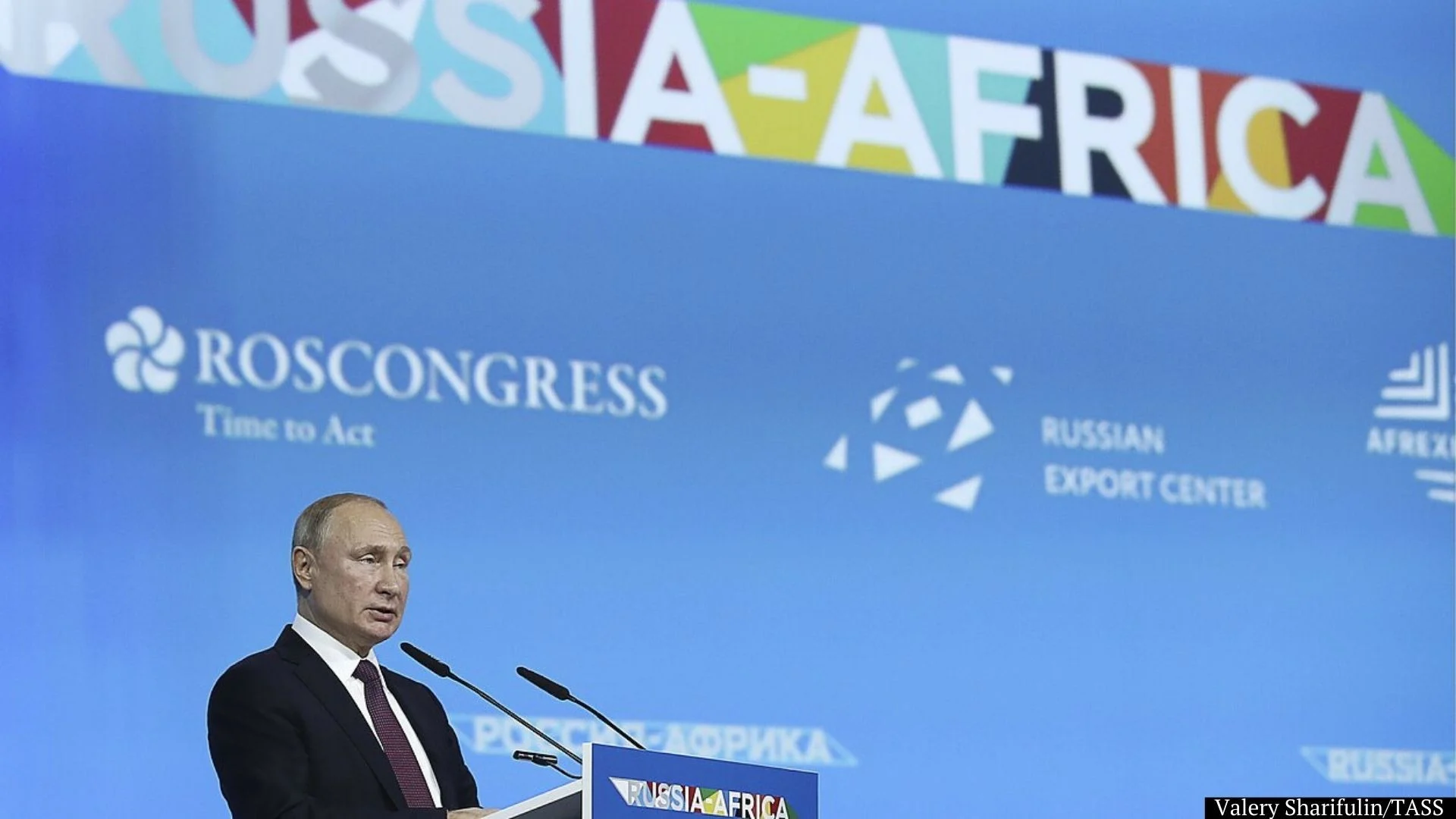
Despite a relatively hegemonic
position of France in large parts of Africa, Russia has recently emerged as a
competitor in the region. This is largely the result of relatively neutral
perceptions of the Kremlin, the emergence of power vacuums in several
conflicts, and the availability to expand arms export markets and acquire
natural resources. However, such moves have eroded the traditional position of
Paris in this part of the world and caused security concerns in the Élysée,
straining relations with Russia. A comparative analysis of recent developments
in Libya, the Central African Republic, and Mali suggests a potentially
challenging future for France in the region due to the proliferation of
innovative foreign policy strategies by rivals.
Between Past and Future
Africa has long been a vitally
important domain of French foreign policy. The continent has arguably counted as the most important region for
France, after Europe, since the invasion of Algeria in 1830 and the subsequent
establishment of the second French colonial empire. France would continue to
consolidate its control over vast swaths of the continent for more than a
century, until a process of decolonization that occurred after the end of the
Second World War.
Although painful processes of
detachment occurred with most of North Africa, decolonization in sub-Saharan
Africa was more gradual, and many ties with Paris remain. While French remains
a lingua franca and de facto administrative language in the Maghreb, French
stands as the official language of 21 sub-Saharan African nations, a fact that
recent French administrations have been keen to take advantage of. The currencies
of former French colonies in West and Central Africa are also integrated into French monetary policies, as the
nations continue to use the CFA franc, a currency bound to the value of the
euro, and are obliged to deposit half of their
foreign exchange reserves with the French Treasury.
While
France has agreed to end this
policy with West Africa, it comes long after Paris has benefited from trade and
economic benefits from this arrangement. In addition to lasting linguistic and
economic ties, France has also been engaged in military
operations in Africa for decades, most
recently in the Sahel region as Operation Barkhane from 2014 to the present
day.
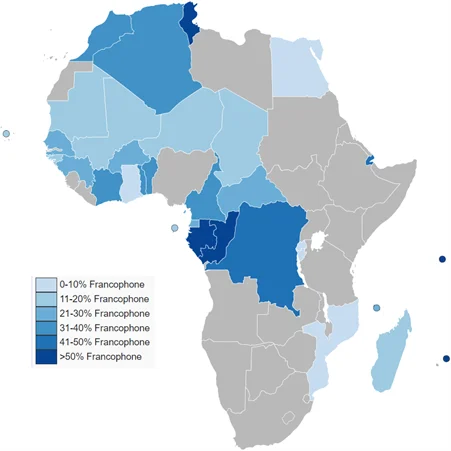
Percentage
of francophone population
in African
countries, 2014. Wikimedia
However,
despite the relatively hegemonic position of France in Francophone Africa for
the past several decades, the global geopolitical environment is becoming more
complex. The pivot of the
United States primarily towards Asia, the economic and political rise of
China, the reemergence of Russia
and Turkey as active global and regional players, and an explosive demographic
(and potentially economic) boom in
Africa have all contributed to a significantly more complex environment for the
French position in Africa.
With
regard to these new challenges, Russia has been particularly assertive in
Africa over the past decade, often clashing with France in security, economic,
and cultural spheres. Russia’s declaration of a
Russia-Africa summit in Sochi in 2019 showcases the Kremlin’s interest in
expanding its footprint in a wide array of African states in the future,
although the multifaceted nature of Franco-Russian relations on the African
continent can so far be largely summarised by their encounters in three
nations: Libya, the Central African Republic, and Mali.
Libya
Never a
lasting part of the French colonial empire, Libya might have seemed an unlikely
location for French military involvement. This is further amplified by the
hopes and warm relations that marked the
Élysée’s posture toward Libya and Muammar Gaddafi during the Sarkozy
administration. In light of failed attempts by Sarkozy to establish a staunch
ally in the Mediterranean, France would eventually call for a military
operation to oust the Libyan government in the wake of the Arab Spring in 2011.
While supported by a
“Coalition of the Willing”, France led every major operation in this conflict
against Gaddafi. The collapse of Libya’s ruling government did not bring an end
to hostilities, however, as Islamist political groups and militias eventually
took the reigns of power. This spurred the rise of a
Gaddafi-era military officer, named Khalifa Haftar, in leading the Tobruk-based
Libyan National Army in 2014, with the intention of rooting out political islam
in Libya.
Although
standing in opposition to the United Nations-recognized Government of National
Accord since 2015, it is Haftar that has received the support of
France. Paris has reportedly
provided weaponry, training, intelligence, and special forces assistance to
Haftar, moves that have proven critical in his securitization of Cyrenaica as a
stronghold. Since 2021, however, France has become more
of a vocal supporter for the Government of National Unity, a government that
aims to unite the Tobruk and Tripoli based governments, although scepticism for
France’s position of neutrality remains. Support for Haftar might be seen as a
reflection of the dominant view in
French political circles that strong-handed secular leaders are the only viable
actors that can prevent militant Islamism and mass migration in the MENA
region.
Read: The Polish Prosecutor’s Office’s Sickness by Adam August
Michalik (Poland)
The
conflict in Libya is further complicated by the fact that, while it began in an
era of relative Western hegemony, it has continued into an era of greater
global multipolarity and assertiveness on the part of several key states.
Russia stands among these nations and became involved in the
Libyan conflict in 2015, a year after its actions in Ukraine and the same year
it became militarily involved in the Syrian Civil War. Unlike many of the
African nations in which France and Russia are involved, however, the Libyan
case marks an interesting example of relatively parallel interests on the part
of Paris and Moscow.
Like
France, the Kremlin also agreed to support Haftar over the UN-recognized
Government of National Accord, principally by the persuasion of
Egypt to supply Haftar’s Libyan National Army with weapons. Since 2017, Russian
ties to Haftar have been bolstered further, including through several personal meetings by the
Prime Minister of the Haftar-supported Libyan House of Representatives with
members of the Russian government. By 2020, Russia has reportedly supplied Haftar’s
forces with aircraft, missiles, and armored vehicles, causing an uneasy
stalemate with the now Turkish-supported Government of National Accord.
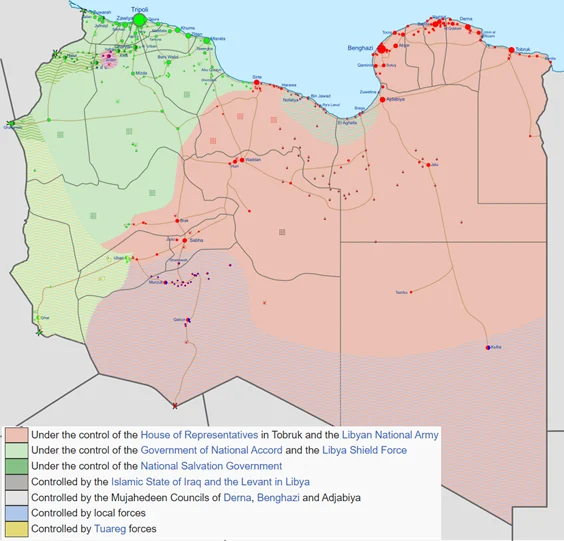
Situation in Libya as of June 2020.
Ali Zifan/Wikimedia
It is
also important to note the significant presence of Russian mercenary forces in
Libya, most notably as
part of the Wagner Group, which may have up to 1,200 contractors operating in
the country. Such formations have complicated calls by the
Government of National Unity, as well as France, for the removal of foreign
troops in Libya due to the weak links between Wagner and any Russian governing
institutions. Overall, Russian interest in Libya is likely guided mostly by the
prospects of
defence contracts, investments in natural resources, and potentially even
desires for a permanent military presence on NATO’s southern flank.
As it
currently stands, both Paris and Moscow vocally support the Government of
National Unity, while both harbouring biases toward Haftar’s faction. Despite
this, Moscow’s interests differ significantly from those of Paris, indicating a
likelihood that the relationship between these powers in Libya will become more
complex and competitive with time.
Central
African Republic
Formerly
part of French Equatorial Africa, the Central African Republic has known seven French
military interventions since independence in 1960. The latest came in the form
of Operation
Sangaris, beginning in 2013 in light
of calls from the President of the Central African Republic for support against
Islamist militias, known as Séléka, which
had reached the vicinity of the capital from the north. After the fall of the
capital, rogue Christian militias, known as the Anti-balaka, rose to combat the
new government by 2014. The worsening of hostilities and fears of genocide led
to the increase in French involvement and begining of a French and African
Union-led UN mission called the African-led International Support Mission to
the Central African Republic (MISCA).
By
2015, French forces had secured the capital city and most of the western part
of the Central African Republic had returned to government control. Apart from
leaving behind a small rapid reaction force, France began to pull
out most of its troops and cede operations to
MISCA, and officially ended Operation Sangaris in 2016. However, despite
largely withdrawing from the field, hostilities have not completely ended, and
the absence of French leadership in the region has left a vacuum open for other
powers.
Visit: The Odebrecht Corruption Scandal: the
End of the World Plea Deal by Dulce María Hernández Márquez (Mexico)
Bangui’s disappointment with the
progress of UN peacekeepers in taking back control of its territory resulted,
in March of 2018, in the Russian Foreign Ministry announcing that it would be
providing free
military aid to the Central African
Republic as per request. More specifically, the Russian Defence Ministry would provide
small arms and ammunition to the armed forces of the Central African Republic
and send 5 military and 170 civilian instructors to train the country’s
military servicemen. Many believe that this comes alongside a greater
presence of Wagner Group forces in the country, as Wagner has reportedly taken
over as the presidential guard, and is currently estimated to number around
2,300 personnel.
As part of these deals with Russian
actors, President Touadéra also appointed a former Russian intelligence officer
as his National Security Advisor, and for a time the Russian economic mission
in the country also took control of customs revenue collection at the Central
African Republic’s borders. Along with such benefits, there is also evidence indicating that Bangui is
compensating Russia and the Wagner Group with control of strategic gold and
diamond mining zones. Additionally, in November 2021, President Touadéra declared that Russian would henceforth be a
mandatory language of study for all university students in the country.
Unlike relations in Libya, Russia and
France find themselves at great odds over recent developments in the Central
African Republic. Paris largely views Russian encroachment in the region as a
direct challenge to a traditional French sphere of influence, which appears
threatened by growing security, economic, and cultural ties to Moscow. Tensions
are further reflected in recent ‘cyber warfare’ between trolls and influence
operations through social media emanating from Russia’s “Internet Research
Agency” based in St. Petersburg, as well as the French military, marking the first known instance of such a
campaign being carried out by a Western government. Conflict between these
trolls online eventually resulted in Facebook suspending approximately 500 accounts related to
both countries’ operations in December of 2020.
Russian propaganda towards Africa is
also noteworthy in its common use of local language instead of French,
likely in an attempt to garner an association of respect towards local cultures
in opposition to narratives of imperialism placed on France. In June of 2021,
France also firmly suspended military cooperation of its remaining
300 troops, as well as budgetary aid to the Central African Republic,
explicitly on the grounds that Bangui was «complicit» in a
Russian-led anti-French campaign. While France remains integrated in UN and
EU-led missions in the country, its position has dropped dramatically after
Russian engagement in the region in 2018, with dialogue or compromise between
Paris and Moscow in the region appearing unlikely.
Mali
Formerly part of French West Africa,
Mali has traditionally acted as a close partner of France in the region.
However, in early 2012, a Tuareg insurgency broke out with the intention of
establishing an independent state known as Azawad in the north of the country. This
situation was further complicated by the fallout of the Libyan Civil War, which
facilitated the exploitation of the situation by Islamist groups,
including Al-Qaeda, who effectively took control of much of northern Mali by
the end of the year. This led to a French military intervention in the country
at the behest of the central government, beginning in 2013 as Operation
Serval, which resulted in the recapture of all Islamist
strongholds by mid-2014.
Serval was succeeded by Operation
Barkhane, with a broader mission «to
become the French pillar of counterterrorism in the Sahel region,» and
combat the Islamist presence in the Sahel over a longer period of time. With
approximately 5,000 troops across the Sahel region, Operation Barkhane was
complicated by coups d’état in Mali in both 2020 and 2021.
French cooperation with Malian forces ceased for
several weeks in 2021, and President Macron declared that the Barkhane mission
would soon be over
and replaced by a more international operation.
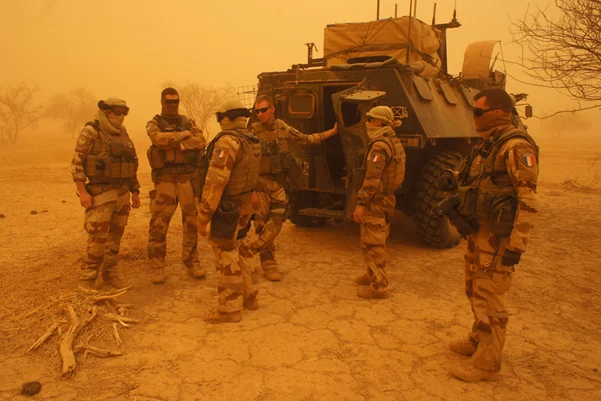
French troops taking part in Operation
Barkhane. Reuters/Media Coulibaly
French
intervention, while relatively popular in the
north of Mali, has become quite unfavourable in the south of the country, with
anti-French protests taking place frequently. This was part of the calculus,
along with fears that
local governments were negotiating with terrorist groups, that led to President
Macron’s decision to cut down military engagement. However, this led to accusations from
Mali’s Prime Minister Choguel Maiga that France was abandoning the country, which
appears to have spurred the Malian government to seek out alternative security
providers, such as Russia and the Wagner Group. The Soviet Union and Russia
have a history of warm relations with Mali, even counting
as the country that Malian Prime Minister Maiga
received his PhD from. Two of the five members of the junta that performed the
2020 coup d’état in Mali also received military
training in Russia.
You may be interested in: The future of NATO in the
context of European security
Moreover,
the Kremlin was instrumental in providing
helicopters,
ammunition, supplies, and training staff and other personnel to Mali in 2019. In
September of 2021, as relations with France worsened, the Defence Minister of
Mali travelled to Moscow, and it soon became clear that the country was negotiating a deal
to potentially bring in 1,000 personnel from the Wagner Group. Reports also
indicate that Wagner would be offered both traditional payment and control of
specific mining
operations as compensation for their work.
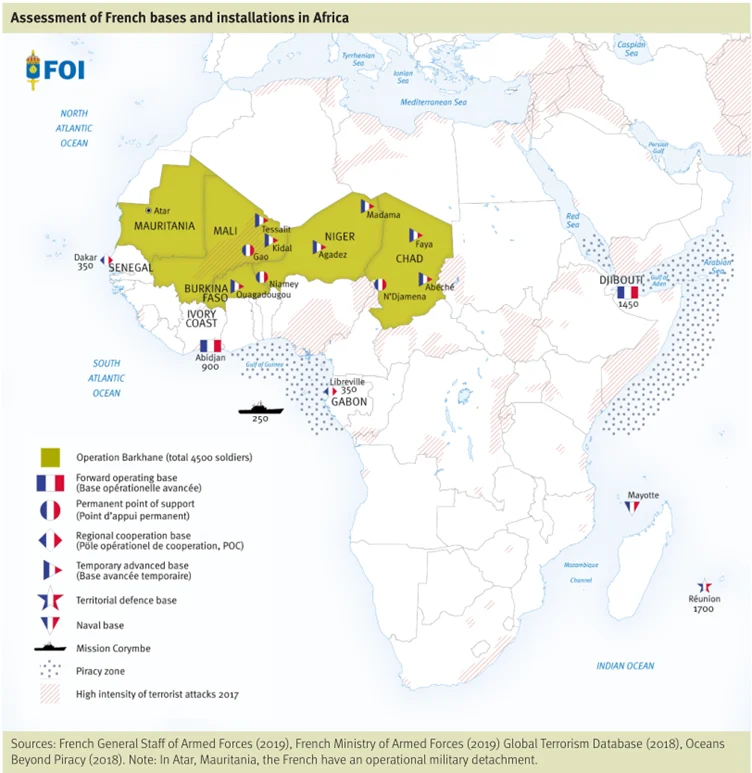
Based
on the report of the
Swedish Defence Research Agency
These
moves have infuriated the Élysée, prompting French officials to state that
the involvement of Wagner forces would render French cooperation with Malian
security forces “incompatible.” The
Takuba Task Force, the European wing of Operation Barkhane led by Sweden and
including troops from the likes of Germany and the United Kingdom, also seems likely to
pull out of the conflict if negotiations with the Wagner Group follow through.
Like Franco-Russian relations in the Central African Republic, developments in
Mali mark an increasingly difficult posture in the bilateral relations between
Paris and Moscow.
Common
and Emerging Challenges
While
France and Russia are both engaged in many other global operations, the cases
of Libya, the Central African Republic, and Mali are critical in understanding
the evolving nature of their relationship. Recent developments in these nations
also demonstrate certain key trends in the way that the Kremlin and Élysée
approach global politics.
One
important commonality in Russian approaches to intervention in all three of
these conflict zones is the primacy of interest in weapons deals and arms
exports. While the link between Russian geopolitical interest and its use of
arms exports is not
a new phenomenon, the acceleration of this trend to
a greater variety of global conflict zones and the aggressive pursuit of new
markets may indicate the general direction of Russian foreign policy in the
years to come. Russia currently stands as the second largest arms exporter in
the world, after the United States, and accounts for around 20% of global arms
sales. France has a long history of
attachment to its own arms industry as an expression of its strategic autonomy,
but this goal is highly dependent on the sale of French arms abroad. The
proliferation of Russian arms in regions like sub-Saharan Africa may therefore
have critical repercussions to France’s own arms industry.
In all
three of these cases, it is also evident that the Kremlin has taken action when
the realities of a power vacuum become clearest. While France provided military
support to the Central African Republic and Mali for some time, these states
sought out Russian support after political will in Paris was exhausted.
Haftar’s case also spells out a similar recipe, as Paris was not willing to
overtly support Haftar through conventional military means, the conflict served
as an ideal scenario for Moscow to make use of the Wagner Group. As the United
States continues to pivot to Asia and leave issues in the Mediterranean and
Africa to local powers, France may have to learn to compete with the hard power
offered by nations like Russia and Turkey if it wishes to retain a position of
influence.
The use
of the Wagner Group and other private military companies can be described as
the elephant in the room, as this aspect of Russian foreign and security policy
arguably constitutes the most dramatic and innovative addition to its arsenal
in the past decade. The importance of personal connections and informal
networks within the Russian political system has rendered unique advantages
that produced the
availability of indirect military assets like the Wagner Group. The use of the
Wagner Group also bestows certain leverages for the Russian state, such as in
the case of Libya, where it can actively deny the
relevance of French calls to pull foreign troops from the conflict zone. The
efficient and elastic nature of Russia’s relationship with private military
companies seems to point toward their proliferation of use by the Kremlin going
forward, as well as the likely adoption of this strategy by other illiberal
regimes. Symmetric competition by liberal democracies in this field is unlikely
to prove feasible, and responses to these developments by Paris and other
Western nations will likely require further innovation.
Finally,
the use of online influence operations, especially through social media,
constitutes another new development in Russian foreign policy in the past
decade. The actual effectiveness of such methods remains up for debate, as Facebook
analytics revealed that
operations by both France and Russia towards the Central African Republic
largely failed to reach their actual target audience. Additionally, while it is
likely that Russian propaganda has played some role in the growth of
anti-French sentiment in the region, this is a trend that is likely also due to
other underlying factors related to the history, politico-economic relations,
and military operations of France in Africa for the past 200 years.
Nonetheless, the trend towards greater hostility towards French presence in the
region remains one of the most serious issues for the Élysée going forward, as
regions like the Sahel continue to pose immense security risks for the French
state, and stability in Francophone Africa is a prime deterrent to seismic
migration crises.
Conclusion
Relations
between Paris and Moscow have been marked and molded by hundreds of years of
history. While France has retained a privileged position on the African
continent since the Cold War, the re-emergence of Russian presence in the
region threatens to add further complexity to the shape of bilateral ties
between the two countries. Interaction in Libya has demonstrated an uneasy
common position in support for Haftar, although diverging interests at a deeper
level will likely render this a short-lived state of affairs. Russia is
primarily concerned with the expansion of its arms export market, as well as
the acquisition of natural resources across Africa. This is demonstrated not
only in Libya, but also in the Central Africa Republic and Mali.
While
the erosion of French primacy in security, economic, and cultural spheres in
these latter states threatens the Élysée’s conception of traditional spheres of
influence, it also poses a potential challenge for its domestic arms industry,
security against terrorism from the Sahel region, and prevention of mass
migration. While Russia has only recently re-emerged as a competitor in Africa,
the largely inexpensive nature of its operations there, as well as the relative
lack of US presence, will likely encourage the Kremlin to pursue greater
activities in the region.
The use
of private military companies, especially the Wagner Group and those like it,
as well as influence operations through social media, is also likely to
increase. The maintenance of the French position in Africa will, therefore
likely, prove to be a challenge, as Paris will be forced to develop competitive
innovations to combat Russian strategies, as well as their potential adoption
by other emerging rivals with similar aims.
Written by Sven Etienne Peterson, a research
assistant at ADASTRA Think Tank
If this article was useful for you,
support us on Patreon to get more high-quality articles on
the issues of international politics.