
Both positive and negative aspects undoubtedly characterize Latin
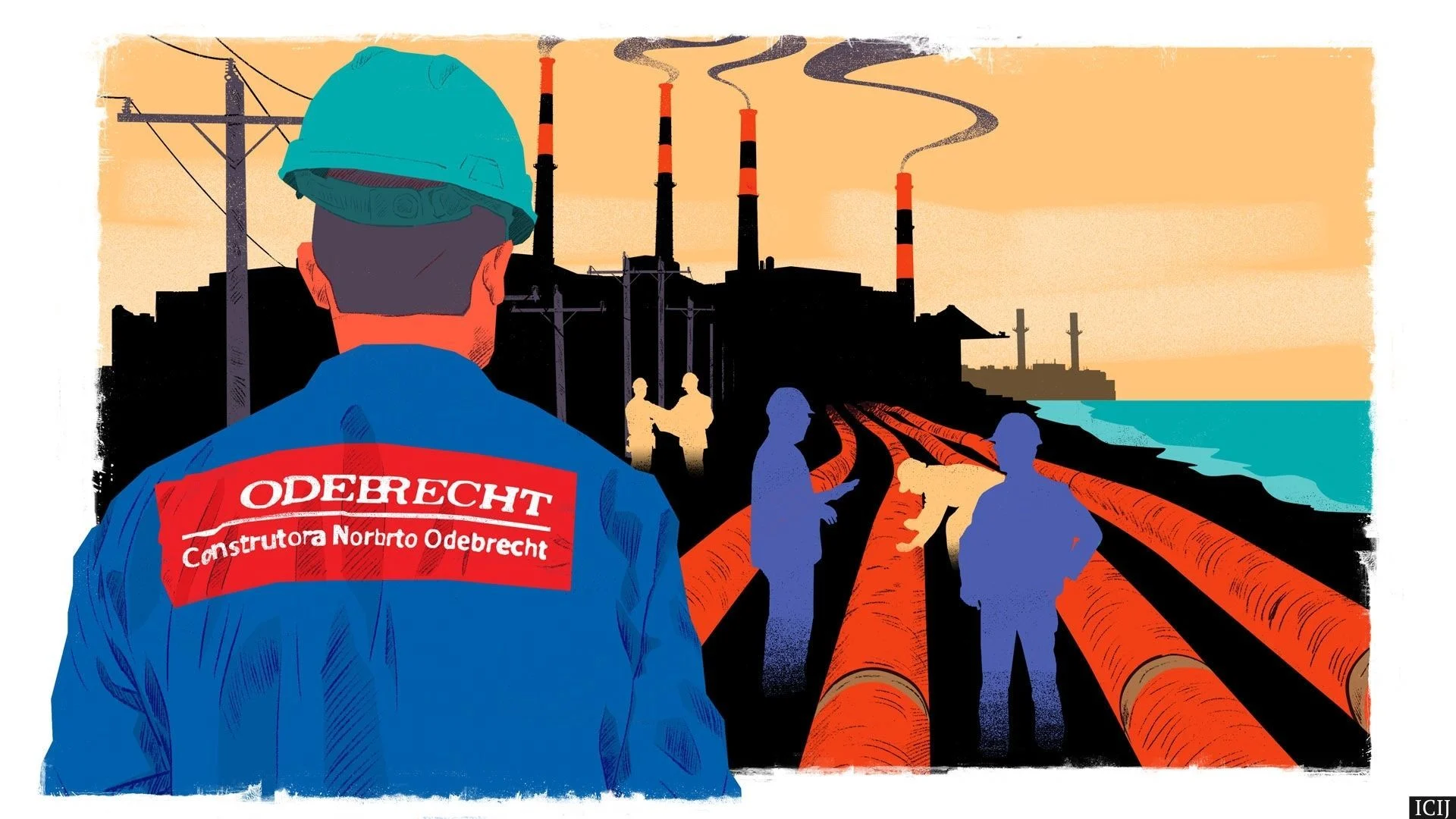
America, and one of the negatives is corruption. Odebrecht is the most
outstanding example of this, a corruption scandal that emerged from a money-laundering
scandal. Odebrecht’s statements would lead to the collapse of the already very
unstable Latin American governments. In 2015, the president of one of the largest construction companies in
Latin America was convicted of money laundering in the Brazilian Lava Jato (car
wash) operation, related to the well-known Brazilian oil company Petrobras, as
part of his statement towards The US government, Marcelo Odebrecht along with
other Odebrecht executives carried out what would be known as “the end of the
world plea deal,” thus uncovering the largest corruption scandal not only in
Latin America but in the world.
The end of the world plea deal involved senior officials from at least
12 Latin American countries, as well as some African countries, accusing them
of taking bribes to give Odebrecht the most critical public works contracts in
those countries. In that article, we will review all the essential details that
this case has and the political impact of the case country by country.
According to the investigations carried out after said
declaration, it was discovered that between 2005 and 2014, the construction
company made
millionaire bribes in a wide variety of countries, including Brazil, Peru,
Ecuador, Colombia, Venezuela, Argentina, Guatemala, Panama, the Dominican
Republic, in Latin America, in addition to Angola and Mozambique, in Africa, as
well as the United States.
Check out: Vaccines: a Special Guest at the Coronavirus’ First Birthday
Party by Agnieszka Homańska (Poland)
The bribes that the partners of Odebrecht gave to the officials were for them to execute
multimillion-dollar contracts and infrastructure works in favor of the
Brazilian construction company, which is the one responsible for building the infrastructure for the 2014 World Cup, the 2016
Olympics, and the metro system in Caracas, etc.

Fireworks at the Maracana stadiums which was involved
in the Odebrecht scandal. Pascal Le Segretain/Getty Images
Some of the countries in which the case had the most
political impact are mentioned below.
Brazil
In Brazil, where the construction company is from and where it all
started, the money laundering operation is known as Lava Jato, which led to the
discovery of large corruption networks, has imprisoned essential people in
business and politicians since 2014, this includes former presidents Luiz
Inácio Lula da Silva (president from 2003 to 2011), who
has been
serving an 8-year and 10-month sentence since April 2018 for corruption and
money laundering; Dilma Rouseff (president from 2011
to 2016) who was dismissed from her position as president in 2016, for her
involvement in Lava Jato and for receiving $ 48 million
from Odebrecht; and Michel Temer (president from 2016
to 2018), who has already
been put in preventive prison twice and released.
Peru
In Peru, the Odebrecht
case led to a political crisis. Pedro Pablo Kuczynski (president from 2016 to
2018) was
forced to resign from the presidency after being linked to Odebrecht bribes; today, he is under house arrest.
Also involved are ex-presidents Alejandro Toledo
(president from 2001 to 2006), who fled to the United States, and Ollanta Humala (president from 2011 to 2016), who spent nine months in detention. The case also led to the suicide of Alan García (twice president, 1985-1990 and 2006-2011) when he
was to be arrested as part of the Odebrecht
investigations against him.
Ecuador
Meanwhile, in Ecuador, Jorge Glas (Vice-president from
2013 to 2018), since 2017, has
been serving a 6-year sentence for the crime of illicit association in the Odebrecht corruption case. Other
politicians have also been involved in the case.
Venezuela
Venezuela is supposedly the country where Odebrecht gave the most bribes, around
98 million dollars in bribes to officials. As a result, the Venezuelan Supreme Court in
exile sentenced
Nicolás Maduro to 18 years in prison. However, it did
not happen due to the great crisis that the country is experiencing.
In addition, there are specific
projects pending to be built or finished in the country, such as highways, bridges, and subway lines.
Mexico
In Mexico, Odebrecht transferred
more than 10 million dollars between 2010 and 2014 in exchange for contracts
with the productive oil company of the State, Pemex. Emilio Lozoya (general director of the
company from 2012 to 2016) also faces a legal process for this and the Fertinal case. Lozoya fled to
Spain but was extradited in 2020 and faced Mexican
justice.
In
turn, he accused former
presidents Enrique Peña Nieto (2012-2018), Felipe Calderón Hinojosa (2006-2012)
and Carlos Salinas de Gortari (1988-1994) among other politicians of receiving
bribes from Odebrecht too. However,
no action has been taken against them.
Conclusion
The Odebrecht
scandal undoubtedly shook the Latin American governments. However, if something
is essential to rescue from what happened, it is the actions that various
governments have taken, since before, it could seem impossible that the removal
of a president or a judicial process could take place against this.
Visit: 2020 in Latin America: a Political
Roller Coaster by Dulce María Hernández Márquez
(Mexico)
The Odebrecht
is just one of the cases of the Latin American reality that will be discovered
over time. However, with this case, it is possible to see the failures in the
system and how corruption has very colluded within governments.
Latin America continues to have its failures, not
for nothing, this is the largest corruption scandal in the world, in some
countries, cases of impunity continue to be presented, and it is very likely
that we still do not know all of those involved, as well as another case of
corruption of this magnitude, may be occurring at this very moment.
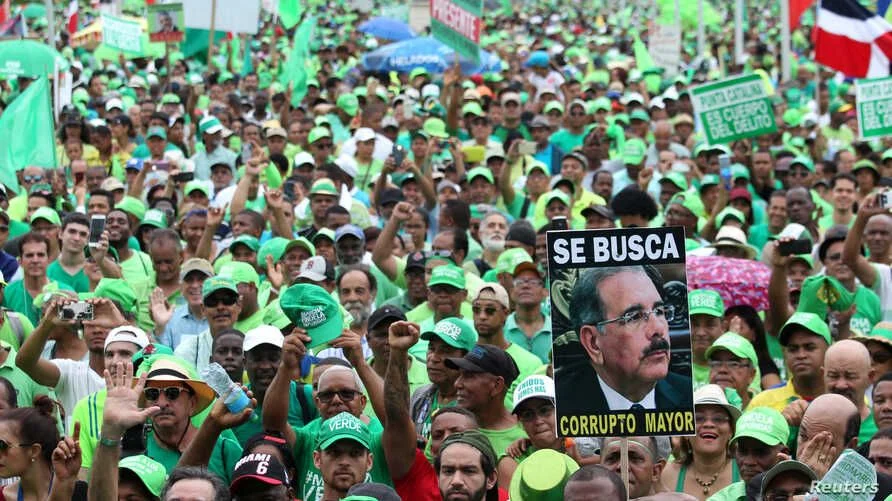
Protests against corruption and Odebrecht in Santo Domingo, Dominican
Republic in 2017. The sign says ‘Wanted corrupted senior’. Reuters
Written by Dulce María Hernández Márquez,
Associate Fellow on Latin America Politics (Mexico)