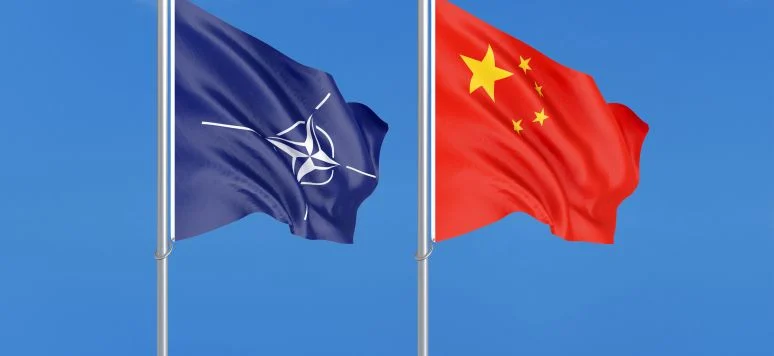
In recent years, NATO started paying closer attention
to the potential challenges that China may pose to the Alliance. After the
beginning of the 2022 Russian full-scale invasion of Ukraine and Beijing’s
ambiguous reaction to it, NATO member-states acknowledged China’s ambitions and
coercive policies in the regional and global context. The dynamics of
Sino-Russian relations, the outcomes of the Russian war against Ukraine, and the
evolving nature of the global security challenges, in which China is involved, cause
fundamental changes in NATO’s perception of its role and vision of the future.
NATO’s
strategic agenda in the past
Since the 1949
Washington Treaty was signed marking the foundation of the North Atlantic
Treaty Organization, the Soviet Union, and then, the Russian Federation has
always been a major threat to the security of the Alliance. Until the collapse
of the USSR, NATO had never gone beyond the Euro-Atlantic region focusing primarily
on the Soviet threat and nuclear deterrence.
The dissolution of
NATO’s main adversary presented it with a fateful problem – what should be the
future of the Alliance? Therefore, the Alliance reconsidered its initial
purpose and outlined the new agenda around the two major dimensions of
activities – the cooperation with the former Warsaw Pact states, especially in
Central Europe, and the resolution of the conflicts in the European region,
such as the Balkans. NATO’s relations with Russia have also been reshaped to
the framework of the NATO-Russia Permanent Joint Council (since 2002
NATO-Russia Council) which aimed at fostering the development of a partnership
between the two parties.
After the 2008 Russian invasion of Georgia and the
2014 Russian annexation of Crimea and the invasion of Eastern Ukraine, NATO has
dramatically changed the perception of Russia and its role in the European
security environment. For the first time after decades-long efforts to
reestablish relations, NATO declared Russia to be its main adversary in the
European region and recognized its clear ambitions to impose its hegemony on
the neighboring post-Soviet states.
Sino-Russian
Strategic Partnership: the Key
Features
To have a full picture to analyze the current
situation around the boundaries of the Euro-Atlantic region, it’s important to
analyze the key features of the Sino-Russian strategic partnership which has
even deepened its interconnectedness in recent years.
Sino-Soviet relations experienced many shifts
throughout the decades. Yet, it all changed again after the dissolution of
the Soviet Union and the United States assuming unilateral
world dominance afterward. It
accelerated the Sino-Russian alignment which they have perceived as a
counterweight to the West. Therefore, in July 2001, a
bilateral treaty was signed claiming the two states to be “friends” and “good
neighbors”.
Even though this partnership seems to be quite asymmetrical,
or rather to put it another way, both parties have sort of different
perceptions of each other as well as different approaches to various issues in
the international arena, their cooperation has thrived
throughout the last decades in key fields, such as trade, energy, military, etc.
The Kremlin and Beijing started to
cooperate with a vision of a new multilateral world order that, for instance,
Putin made clear in his speech at the 2007 Munich Security Conference. Both of them have basically taken the position
of a strategic anti-American coalition.
Trade and military cooperation
First of all,
Russia and China are linked by mutual trade interests. As for China, Russia is
an important supplier of oil and coal as well as food and fertilizers, and
thus, trade relations with Russia are a part of China’s energy security and
stability, especially since it allows Beijing to avoid being dependent on the
Middle Eastern states and get energy for a
relatively low price. Also, Russia has been one of the main sources of military
technologies for China that helped Beijing carry out military modernization and
start developing its own military capabilities. As for Russia, China is one of
the most important export destinations and it is also an important supplier of
manufactured goods and technologies. Notably, China-Russia
dollar-denominated trade hit $240.1 billion
in 2023, growing 26.3% from a
year earlier, according to the data by China’s General Administration of
Customs. Furthermore, after the beginning of the Russian full-scale invasion of Ukraine, bilateral trade and investment have
disproportionally increased including trade agreements in national currencies.
A counterweight to the West
Russia and China
are united by an anti-American sentiment which is
the basis of their vision of the world. Since Putin and later on, Xi Jinping
assumed power, they started seeking to project their power in different regions. The Kremlin has relatively limited ambitions aiming to spread its influence in the
post-Soviet states, while globally oriented Beijing targets Africa, Latin America, and Central Asia. Xi would like to make the authoritarian communist party-based system more
attractive and sell it as an alternative to the Western liberal democracy, especially to the countries of the
Global South.
Вас може
зацікавити: Континент надії чи
нова ціль неоколоніалізму: як Африку бачать США і Китай?
It’s also crucial
to understand that both governments use the current international order for
their own sake, especially in international trade, but also in international
organizations. For instance, they tend to take the same positions on various
issues in the UN and use this platform to drag new states into their sphere of
influence. On the other hand, they are willing to create alternative global
financial structures and diminish the strength of the United States dollar which is evident from their active cooperation
within the framework of BRICS which is
seen as a counterweight to G7.
What Role Does the Russian War against Ukraine Play in
Sino-Russian Relations?
The 2022 Russian
invasion of Ukraine has made an immense impact on the dynamics of China-Russia
relations. On one hand, the Russia-China
strategic partnership has been accelerated, yet the asymmetry between both
parties increased as well. Russia has always been the weaker side, even though
Putin wants to be treated as an equal partner, and
so, the failure to achieve the main objectives of the war has deepened Russia’s
dependence on the partnership with China, especially in economic terms.
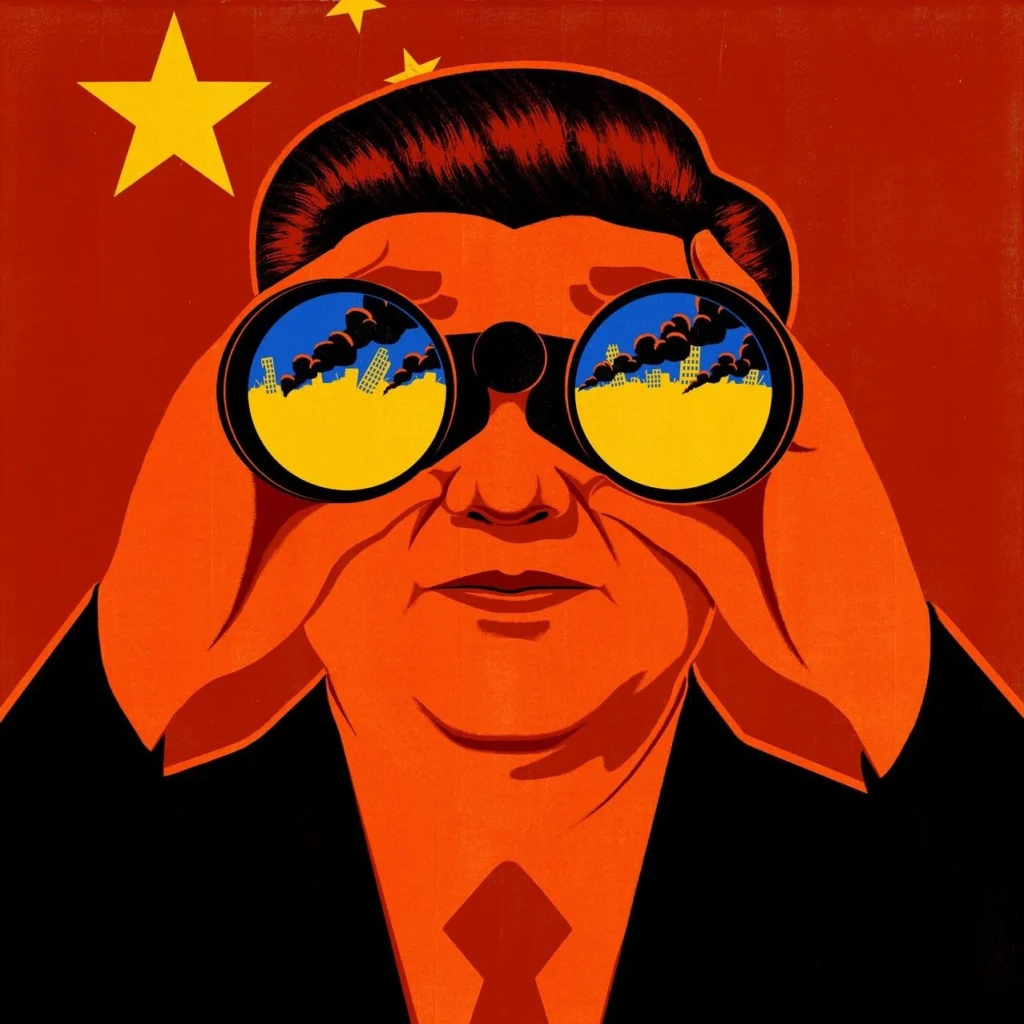
Xi Jinping is watching how the Russian war against Ukraine is developing. Dan Bejar/The Wall Street Journal
However,
simultaneously, the war has made a detrimental impact on China’s relations with
the European Union and intensified its rivalry with the United States pushing
Beijing to make incredible diplomatic efforts to maintain a balanced position
between Russia and the West. Nevertheless, Xi has remained loyal to Putin,
although he has never openly taken sides in the conflict. His rhetoric has been
quite ambiguous which is evident from his claims about NATO and the US posing a
threat to the security of Russia that, from Beijing’s point of view,
legitimizes Russia’s war against Ukraine. Simultaneously, Beijing has always
emphasized the essentiality of sovereignty for the contemporary international
order which is believed to be a core basis of Xi Jinping’s vision of the new
world order that he would like to establish. This also fits into China’s
position on Taiwan. Furthermore, the “peace plan” for Ukraine issued by Beijing
last February stressed the importance of sovereignty, independence, and
territorial integrity of all countries, yet Ukraine was not mentioned
specifically. At the same time, China has not recognized Russia’s
annexation of Crimea and Donetsk and Luhansk regions. This makes the Chinese position on the
Russia-Ukraine war very contradictory, however,
Western analysts tend to interpret the Chinese government’s actions as leaning
toward the Kremlin side and prioritizing the strategic partnership over the
ideological vision of the world.
Дізнатися більше: Китай – латентний
союзник кремля
Despite Russia’s
failures in Ukraine, China continues to support the Kremlin which is explained
by the risk that may arise in case of regime change in Russia. Putin’s
dependency and thus, loyalty to China is extremely important for Beijing in
terms of its energy security as well as strategic competition with the United
States. Therefore, a weak Russia with almost 6000
nuclear warheads
being torn apart from within by potential successors to Putin’s power is one of
the most undesirable outcomes for China that forces Xi to maintain the partnership
and seek diplomatic tools that will not undermine his position on a regional
and global scale. Beijing is also worried about
the possibility of so-called spillover
effects in case of a regime change in Russia which could cause instability on China’s border with Russia,
Kazakhstan, Kyrgyzstan, and most notably Tajikistan.
China’s potential threat to NATO
Belt and Road Initiative
As mentioned above, Xi’s ideological basis of his
foreign policy is the idea of changing the rules-based international order as
well as spreading its influence worldwide. One of the most prominent Chinese
programs of soft power is the so-called Belt and Road Initiative (BRI). Beijing
utilizes economic tools, mainly investments in infrastructural projects, in
order to drag particular African, Latin American, Central Asian, and even
European countries into its sphere of influence. In the context of Europe, such
dependency is one of the largest fears of NATO, since more than half of the
NATO member-states signed agreements somehow related to the Belt and Road
Initiative. For instance, China bought a 51% stake in
Piraeus, Greece’s largest port. This
is one the examples of Chinese investments in seaports, telecommunications, bridges,
rails and civilian roads, and other strategic objects to increase political
dependency and spread its malicious influence. Besides, the 16+1/17+1 format has been the main framework for the cooperation
between China and Central and Eastern European states, yet it appeared to be
rather unsuccessful. Consequently, such initiatives cause division between the
NATO allies and may lead to the deterioration of their deterrence and security
capabilities.
Дізнатися більше: «Один пояс, один шлях» – ініціатива для розвитку країн
чи крок до гегемонії Китаю?
Telecommunications
Another potential threat lies in the 5G/6G network
development led by China. This
is a part of the technological competition and NATO is very cautious about the
risk such innovations pose to Euro-Atlantic security and stability.
Nukes
China is also expanding its nuclear arsenal and
delivery systems. According to some experts, Chinese warheads are already
capable of reaching any destination in the North Atlantic region. In the
meantime, Beijing refuses any arms control negotiations and conducts the
replenishment of its nuclear stocks in a very opaque way. Nevertheless, one of
the evidence of Xi’s relatively conscious approach to nuclear weapons is the fact that Xi is believed to have persuaded
Putin not to use nukes in its war against Ukraine. This basically means Beijing
tends to maintain the stability of the current situation as well as save the
regime of a devoted ally in the Russian Federation.
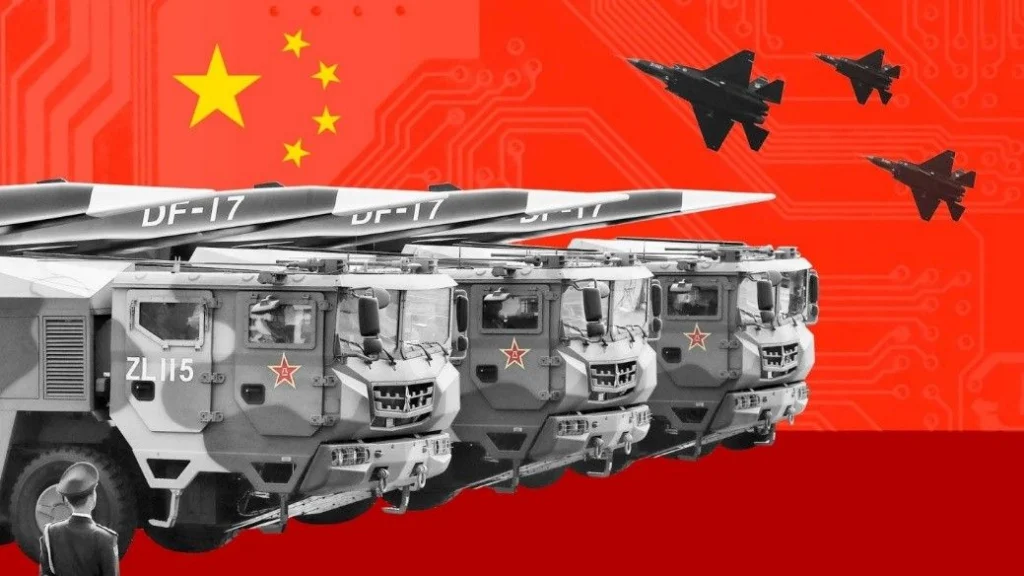
China is ramping up nuclear and conventional military
capabilities. FT montage/AP/ Reuters
China-Russia military cooperation
One of the biggest issues for NATO is military
cooperation between Russia and China which has been expanding rapidly after the
Russian invasion of Ukraine in 2014. Russia has been selling its military technologies to China for years. They have also held bilateral
security conferences and conducted numerous joint military exercises, the most
provocative of which were the Sino-Russian naval activities in the Mediterranean and Baltic seas. Apart from the
European region, Beijing and the Kremlin have gradually started to claim their
ambitions towards the Arctic where they invest in transportation and natural
gas projects. This is considered to be part of the Sino-Russian opposition to
the collective West, especially what they call “the United States hegemony”,
and one of the efforts to demonstrate their military capabilities.
What’s also worth mentioning is the “no-limits”
agreement which was signed between Russia and China right before
the beginning of the Russian invasion of Ukraine in February 2022. The
Sino-Russian Joint Declaration stated that their friendship has “no limits”
which is a clear sign of their rejection of the US-dominated world and further deepening
of the strategic partnership. However, throughout the war, China has not
mentioned it anymore.
The deepening of the cooperation slowed down after
China faced the tremendous impact of the COVID-19 pandemic as well as due to
the rapid development of Chinese military technologies. Russian major failures
on the battlefield in Ukraine could have raised doubts about the reliability of
Russian technologies. Nevertheless, as mentioned above, national interests push
Beijing to maintain a strategic partnership with Putin’s regime.
China on NATO’s Strategic Agenda
Despite the rapid development of the Sino-Russian
strategic partnership, China has never appeared on the NATO strategic agenda until
2019 which can be primarily explained by the principle of staying within the
boundaries of the Euro-Atlantic region. Chinese military build-up is also
believed to be a major threat to its neighbors, such as Taiwan and the
Phillippines, but not to NATO.
The 2019 London Summit of
NATO was the first time when China
was recognized as a crucial direction of NATO’s security matters. However, such
a decision was driven by the United States whose policies were shaped by the
Trump administration at that time. Accordingly, the Trump administration
perceived
China, not Russia, as a major threat to its national
security. “NATO 2030” which was basically a consultation process came up
with the decision that China does create some kind of challenge that must be
addressed by the Alliance, yet simultaneously the importance of maintaining an
open dialogue with Beijing was emphasized as well.
Next time, China was mentioned in the 2019 Brussels Summit
Communiqué where the main
concerns of the Alliance were raised, including Chinese nuclear build-up, the
possible threat of its cyber activities as well as its military cooperation
with Russia.
Following the Russian invasion of Ukraine, the 2022 Madrid Summit introduced the new NATO Strategic Concept where China
is defined as a power willing to challenge the current international order: “The
People’s Republic of China’s (PRC) stated ambitions and coercive policies challenge
our interests, security and values. The PRC employs a broad range of political,
economic and military tools to increase its global footprint and project power
while remaining opaque about its strategy, intentions and military build-up.”
The PRC’s partnership with Russia was also mentioned as one of the potential
touching points between NATO and China. Yet, it clearly states that an open
dialogue is the current priority for the Alliance which would like to ensure
NATO member-states security within the framework of transparent negotiations with
the People’s Republic of China.
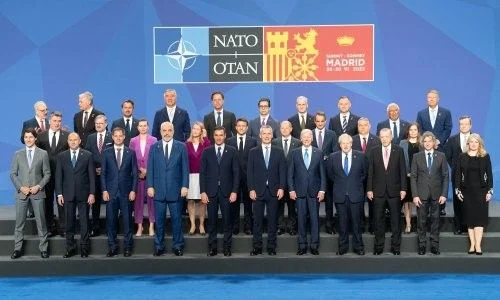
The leaders of NATO member-states during the 2022
Madrid Summit of NATO. June 2022. Stefan Rousseau/Getty Images
NATO in the Indo-Pacific Region
As a result of NATO’s deepening concerns about China,
The Alliance has started to enhance its strategic cooperation with its partners in the Indo-Pacific regions, namely Australia, South
Korea, New Zealand, and Japan. The main goal of such a dialogue is to address
the rising China threat as well as the impact of Russia’s war against Ukraine.
They would like to increase their defense capabilities and cooperation in terms
of a heightened risk to the security environment in both the Euro-Atlantic and
the Indo-Pacific regions.
For the first time, Heads of State and Governments of these countries participated in the 2022 Madrid
Summit and then, the 2023 Vilnius Summit. Such an interregional dialogue is
crucial in the context of the rising threat from Russia and China, however, the
process accelerated only after the Russian invasion of Ukraine. It suggests
that NATO should proactively engage rather than react to events that have
already occurred.
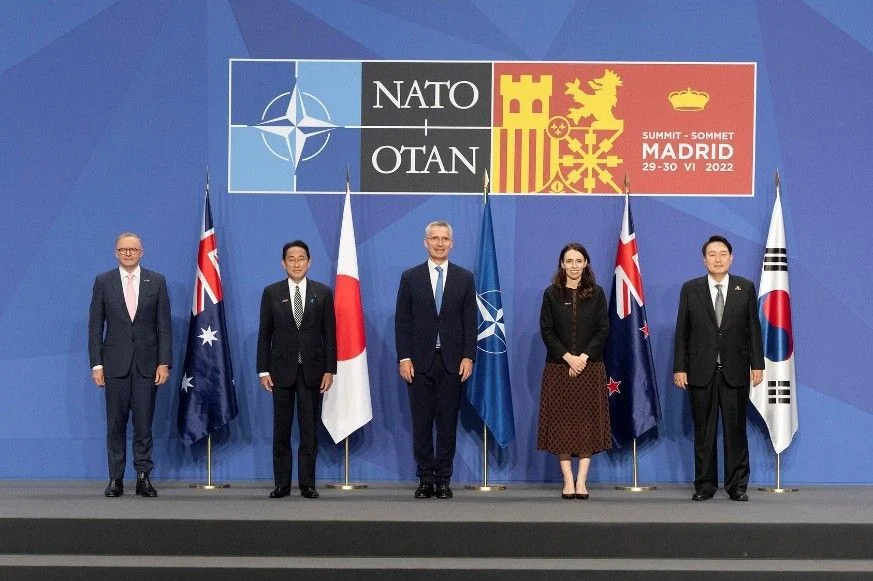
NATO Secretary
General Jens Stoltenberg with the leaders
of Australia, Japan, New Zealand and South Korea.
June 2022. YONHAP/EPA
What Does It Mean?
First, China’s activities in recent have been sending
warning signals to the United States as well as to NATO in a more regional
context. Nuclear build-up, deepening of strategic cooperation with Russia,
exchange of military, cyber, space, and telecom technologies, and the
ideological vision of international order, dramatically different from the
reality we live in now, have been finally taken into consideration by the
leaders of NATO member-states.
Second, The 2022 Russian invasion of Ukraine and
acceleration of the Sino-Russian relations triggered the hardening of NATO’s
approach to China and the official recognition of China as a challenger of
NATO’s defense capabilities and unity within the Euro-Atlantic region. China’s
position in the conflict is leaning toward Russia, yet this has never been
announced officially. However, what’s important to NATO is the fact that Xi puts
the blame for the beginning of the war on NATO denouncing its enlargement
policy while justifying Putin’s regime’s actions. During the 2023 Vilnius
Summit leaders of the NATO member-states have jointly called on China to take
sides in the conflict, namely criticize the aggressor, but the official NATO
position marks its willingness to keep an open dialogue with Beijing. Notably,
China has never been recognized as an adversary to NATO, but as a state capable
of challenging the Alliance in certain areas.
What To Expect in the Future?
The implications of the Russian war against Ukraine
will greatly influence Chinese-Russian relations as well as China’s vision of
its foreign policy and treatment of its neighbors. Considering the future of
security and defense in the Euro-Atlantic region, Russia remains the major
adversary and poses the greatest threat to the Alliance.
As for China, its policy concerning Russia depends on
its involvement in the war as well as the future of Putin’s regime in Russia.
Unlike Putin, Xi totally opposes the use of nuclear weapons in the conflict,
yet he builds up the Chinese nuclear arsenal. Beijing’s foreign policy seems to
be more or less well thought off. He clearly realizes his dominance in bilateral partnership with
Russia and so, perceives them as purely pragmatic relations that he can benefit
from. In the meantime, Putin is dependent on China whose favorable approach
toward Russia contributes to its capability of funding the economy as well as
the war against Ukraine.
The Sino-Russian partnership is also unlikely to get
upgraded to alliance relations, since, despite the relatively common vision of
the future, the asymmetry within the partners, their highly prized autonomy in foreign affairs, and
the prioritization of national interests will prevent them from giving up any
of their powers for the sake of the alliance.
Speaking of the future NATO-China dynamics, several
points are important to keep in mind.
Firstly, NATO is currently dominated by the United
States, so to a certain extent, NATO’s approach towards China will be shifted
by the US presidential administration and will depend on their own policy concerning
China. However, Europeans are also divided on the future of their China policy.
Some of them advocate for a strict attachment to the Euro-Atlantic region
reflecting the old Cold War NATO agenda. On the contrary, the other part is
supportive of going beyond the region and changing NATO’s main objectives and
vision of the main Alliance’s purpose. Obviously, each state takes into account
its own interests in the Indo-Pacific region.
Вас може
зацікавити: США-Індія-КНР – геополітичний трикутник в Індійському
океані
As for NATO itself, further debate on NATO’s
involvement in the Indo-Pacific region will take place in the future. However,
for the time being, the biggest challenge NATO is facing is the Russian war
against Ukraine. That’s why the strategy for the Chinese direction is partially
being shaped by the current dynamics of the Sino-Russian relations and Chinese
actions in the Russia-Ukraine war. Apart from that, Chinese nuclear build-up,
willingness to dominate in the Indo-Pacific, and potential aggression against
its neighbors are within the scope of NATO’s attention as well.
Conclusions
All the recent developments including China’s Belt and
Road Initiative, telecommunications advancements, nuclear expansion, and
military cooperation with Russia raise concerns for NATO, especially regarding
the security implications for the Euro-Atlantic region. The recognition of
China as a significant challenge in the 2022 Madrid Summit reflects a shift in
NATO’s strategic focus. Yet, the only adversary for NATO is Russia at the
moment whereas China is considered to be a potential challenger of NATO whose
actions must be addressed and taken into NATO Strategic Agenda.
Changing the main
provisions of the NATO Strategic Concept is an important event because, in the context of the Russian war against
Ukraine and the rapid evolution of international security, the
Alliance must
be capable of altering its main strategy and adapting to new circumstances. Current NATO’s approach to China implies a desire for
open dialogue, yet NATO’s response to the potential threat posed by China
requires a nuanced and adaptive strategy, taking into account geopolitical
realities and the evolving nature of challenges in the
global security landscape.
Авторка –
Анна-Марія Мандзій, стажерка Аналітичного центру ADASTRA
— Алієв Гамідулла Аман Огли, аспірант ННІМВ Київського національного університету імені Тараса Шевченка, Research Fellow
Сподобалася
стаття? Тоді підтримайте вихід нових матеріалів, ставши патроном ADASTRA.
Цим ви робите свій внесок у розвиток вітчизняної аналітики!